
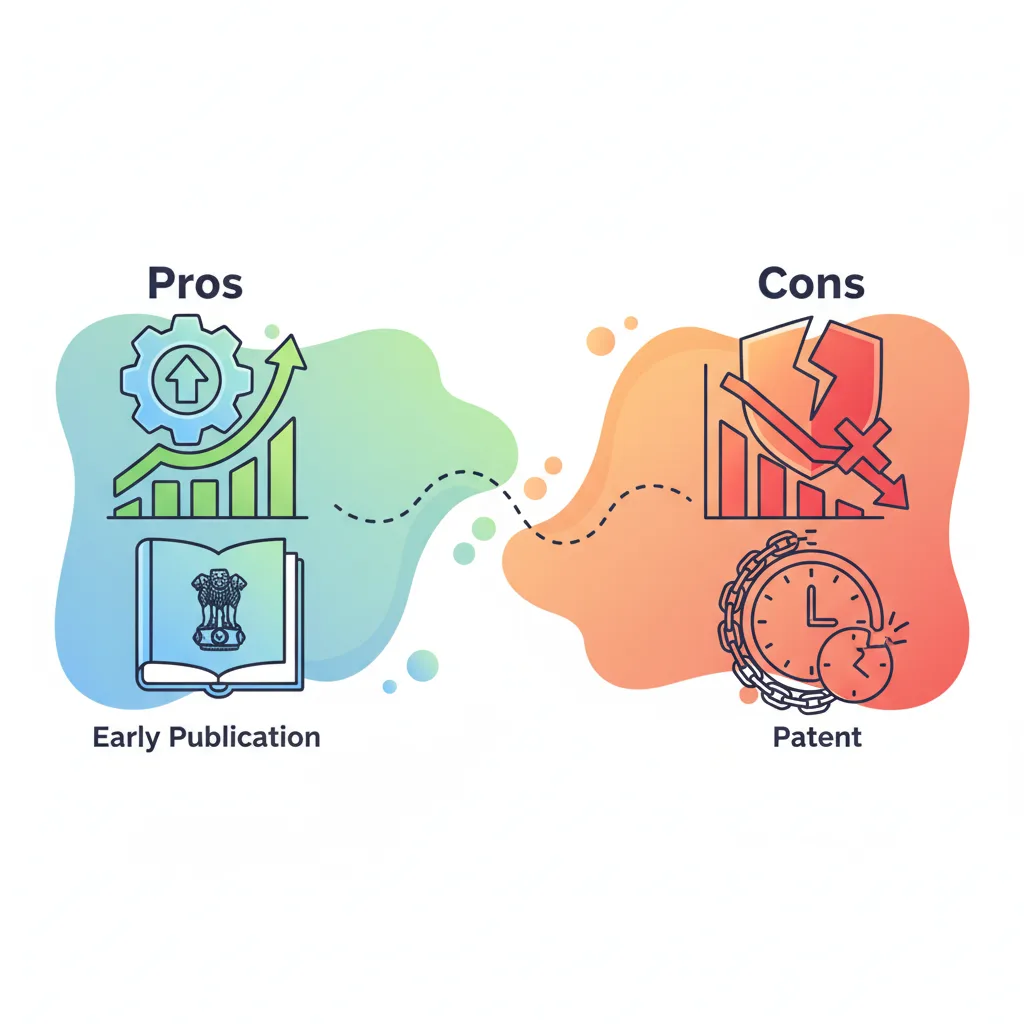
Did you know that almost 30% of patent applications are made public ahead of schedule? As someone who has guided many inventors through the complexities of Indian patent law, I can tell you that determining when to release your patent application when you file a patent in India is a pivotal decision. There is no one size fits all answer. Understanding the advantages and disadvantages of making a patent application available sooner versus adhering to the standard timeline is crucial for aligning your intellectual property strategy with your business goals. It requires carefully balancing potential gains against possible drawbacks, all within the framework of the Indian Patents Act.
What Does Disclosing Early Mean?
Typically, in India, the Patent Office publishes your patent application in its Official Journal around 18 months from your filing date or priority date, whichever comes first. This is the customary process. However, accelerating the disclosure of your patent application enables you to expedite this process. By submitting a request, your application could be released much earlier, sometimes within a month. Section 11A(2) of the Indian Patents Act details this option.
Consider this scenario: you have developed a revolutionary solar panel design. Waiting the standard period to disclose it is like keeping it secret for more than a year. Deciding to reveal it sooner? That is similar to presenting it to potential investors and partners almost immediately. Both options offer distinct advantages, depending on your objectives. It is important to remember that only complete specifications are disclosed, never provisional applications.
Why Choose Early Disclosure?
Why would an inventor want to hasten the unveiling of their patent application? I have seen several valid reasons:
- Potentially Faster Patent Grant: Electing to disclose sooner can potentially accelerate the entire patent granting process. Actions like examination can begin earlier.
- Quicker Access to Expedited Examination: In India, making public sooner is a condition to request expedited examination in some cases. If you are a startup, a woman applicant or meet other requirements, disclosing sooner is necessary to use this faster route.
- Interim Rights Given: From the time of disclosure until the patent is granted, you have specific rights as if the patent had already been granted. While you cannot immediately file infringement actions, it serves as a warning to possible infringers and strengthens your position.
- Earlier Ability to Claim Compensation: If infringement happens after disclosure but before the grant, you can claim compensation from the date of disclosure. Choosing to disclose sooner extends the time frame for which you can pursue compensation.
- Greater Investor and Licensing Appeal: A patent application that is accessible offers solid proof of your invention and its potential. This is beneficial when attracting investors or negotiating licensing agreements. Prospective partners are more likely to consider you seriously when they can review the specifics of your invention in writing.
- Improved Competitive Position: In a competitive industry, disclosing sooner sends a clear signal to your competitors. It may discourage them from pursuing similar inventions. It establishes your priority and officially documents your invention, creating a barrier to entry.
What Are The Downsides to Disclosing Early?
Disclosing sooner involves inherent risks. Carefully evaluate these factors:
- Loss of Confidentiality: Once disclosed, everyone can access the details of your invention. You cannot maintain secrecy, which becomes a problem if you later decide not to pursue the patent.
- Greater Risk of Opposition: After disclosure, any third party may challenge your patent application before it is granted. Disclosing sooner gives them more time to prepare and submit their challenge, possibly delaying your patent.
- Loss of Right to Withdraw: Usually, you can withdraw your application before the 18 month mark to keep it secret. Requesting to disclose sooner means you relinquish this right.
- No Lawsuits Before Patent Grant: You cannot file infringement lawsuits until the patent is officially granted. Disclosing sooner does not change this restriction; it only affects the period for which you can seek compensation later.
Is Disclosing Early The Correct Action For You?
Choosing to disclose your patent application sooner is a strategic decision dependent on your particular situation, business goals and risk tolerance. Here is the advice I give my clients:
- Evaluate Competition: How important is it to convey your intentions? In a highly competitive industry, disclosing sooner can deter others.
- Assess Funding Needs: Are you actively seeking investors or licensing opportunities? Disclosing sooner can be a persuasive selling point.
- Consider Expedited Examination: Are you eligible for expedited examination? If you are, disclosing sooner is likely a necessity.
- Consider Opposition Risk: How likely are you to face opposition? If it is high, consider delaying disclosure to shorten the opposition window.
- Plan Long Term: What are your long range goals? Are you fully dedicated to obtaining a patent, or could trade secrets be a viable alternative?
Requesting Early Disclosure in India: A Step by Step Guide
The process for requesting to disclose sooner is reasonably simple. Submit Form 9 to the Indian Patent Office and pay the required fee. The fee amount differs based on the applicant’s classification (individual, small business or other). Generally, the patent office discloses the application within about one month of receiving the request.
Monitoring Your Patent Application
Closely monitoring your patent application’s status is essential, especially when choosing to disclose sooner. The Indian Patent Office provides an online portal where you can track your application’s progress. Regular monitoring allows you to stay informed about examination reports or opposition filings, enabling you to respond quickly.
A Brief Overview of Filing in India
Here is a brief overview of how to secure a patent in India, intended for those unfamiliar with the patent application process:
- Prepare specifications: Provide a complete description of your invention.
- Submit the application: Submit the application to the Indian Patent Office.
- Request examination: Submit Form 18 to begin the examination process. This must be done within 48 months of the original filing date.
- Address reports: Respond to any objections made by the examiner.
- Patent approval: If all requirements are met, your patent will be approved.
The decision to disclose a patent sooner significantly impacts your overall patent strategy. Consider the advantages and disadvantages, assess your particular situation and seek expert advice to make the best decision. A solid understanding of how deciding to disclose sooner interacts with other critical actions, such as monitoring the status of your patent application or understanding how to secure a patent in India, is vital for achieving success.