
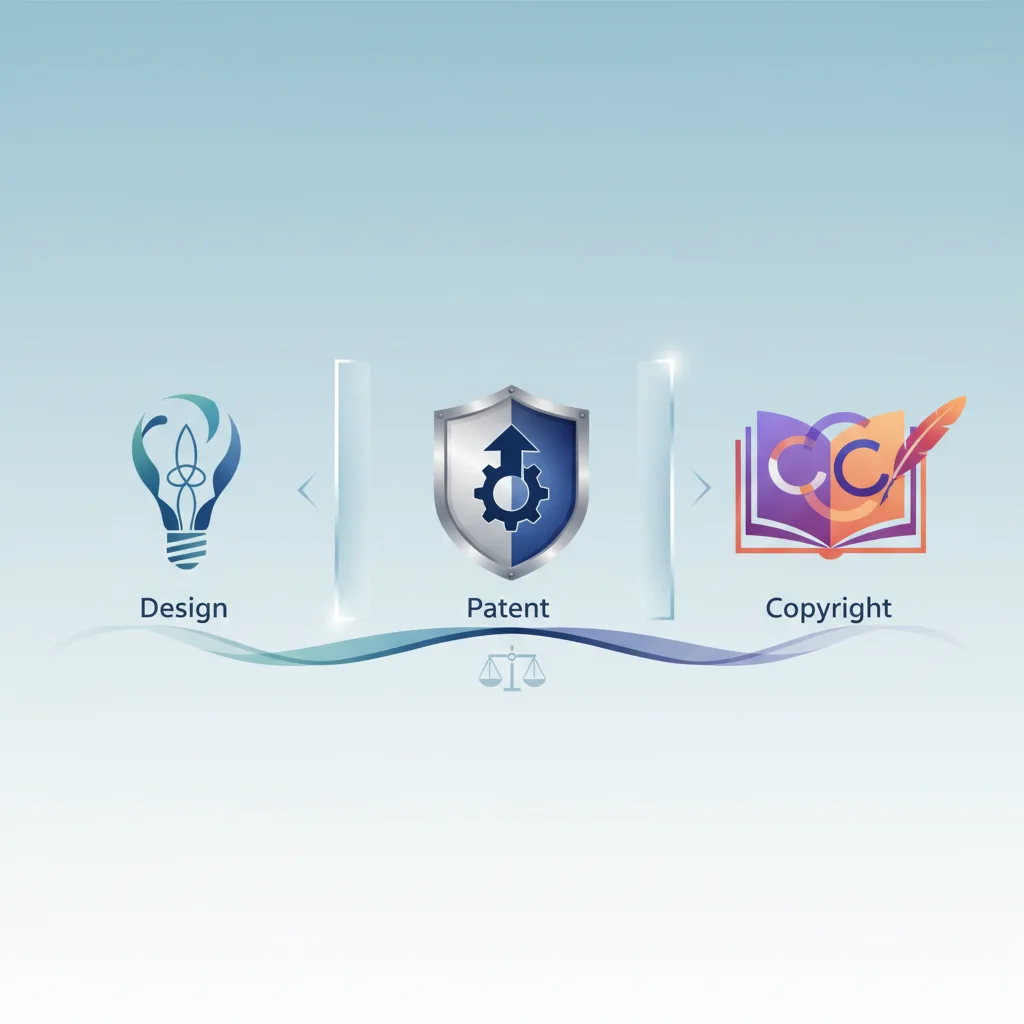
Did you know that intellectual property theft totals over $5 trillion each year? That colossal sum should make every creator pause and evaluate the security surrounding their own work. As you begin contemplating how to defend your ideas, designs and inventions, you will quickly find yourself needing to understand the differences among a design patent, a utility patent and a copyright. I have seen countless creators struggle with this very issue, unsure which type of protection is most appropriate. Let me clarify these concepts and steer you toward the right choice for your specific situation. Understanding this landscape is critical for entrepreneurs, artists and innovators alike.
Intellectual property law offers several distinct protections, each designed for specific types of creative output. A copyright shields original creative works. Patents safeguard inventions. Design patents secure the aesthetic appearance of a functional item. Understanding these distinctions is the most important first step in safeguarding your creative output. It is really not as daunting as it first appears.
Copyright: Protecting Expression
Copyright law safeguards original works of authorship. This includes literary, dramatic, musical and other intellectual creations, regardless of whether they are published. Novels, songs, paintings and software code all qualify for copyright protection. A copyright grants the creator certain exclusive rights: to reproduce the work, distribute it, publicly display it and create derivative works. It is a powerful tool for creators to control their artistic and literary works.
Key aspects of copyright:
- Copyright protects the expression of an idea, not the idea itself.
- Copyright takes effect automatically when the work is created; registration provides additional legal advantages.
- Copyright lasts for the author’s lifetime, plus 70 years.
Suppose you have written a song. Copyright protects the melody, lyrics and arrangement. Copyright will not prevent someone else from writing a song on the same subject. However, it does prevent them from copying your specific creative expression. This subtle distinction is key. Knowing the boundaries of copyright is paramount for every songwriter.
Patents: Protecting Inventions
Patents protect inventions. Utility and design patents are the most relevant to this discussion. A utility patent protects the way something functions, while a design patent protects the visual design of a functional item. Let us examine these in greater detail. Protecting your inventions requires a solid grasp of the difference between patent copyright and trademark.
Let us more closely examine patents:
- Utility Patents: These are granted for new and useful processes, machines, manufactured products and compositions of matter. They protect the functional aspects of an invention, its operation.
- Design Patents: These are granted for new, original and ornamental designs for manufactured items. They protect an invention’s appearance. The specifics of design patent versus copyright are particularly important.
Key aspects of patents:
- Patents grant exclusive rights to the patent holder, allowing them to make, use and sell the invention for a specific period.
- Patents require a formal application and examination; protection is not automatic.
- Utility patents are valid for 20 years from the application date.
- Design patents are valid for 15 years from the grant date.
Think of a new engine. A utility patent would protect the engine’s internal workings. A design patent, in contrast, would protect the visual appearance of the engine’s casing. The function and aesthetics of an invention can be protected.
Design Patents: Protecting Aesthetics
Design patents protect the appearance of a functional item, not its function. This is most valuable for products where visual appeal is a major factor in sales. Reflect on that point. Visual appeal can drive sales.
Consider the shape of a bottle, the design of furniture or the layout of a user interface. A design patent can protect these visual aspects. If your product has aesthetic appeal, you should protect it. Doing so is sound business practice.
I once consulted with a startup that had created a unique chair. While the mechanism was not new, the chair’s design was a key selling point. I advised them to obtain a design patent to protect its aesthetics. That decision proved wise.
Design patents and copyrights both protect visual elements. Nevertheless, their scope is distinct. Copyright protects artistic expression, while design patents protect the design of functional items. That difference is significant. Understanding design vs patent vs copyright is key.
- Subject Matter: Copyright protects artistic creations. Design patents protect ornamental designs.
- Functionality: Copyright disregards functionality. Design patents specifically protect the design of functional items.
- Originality: Copyright requires originality. Design patents demand novelty and non obviousness.
- Protection: Copyright protects against direct copying. Design patents protect against making, using or selling substantially similar designs.
How do you decide on the best course of action? Here is a quick guide:
- Copyright: If you have created art, literature, music or software, copyright is probably the right choice.
- Utility Patent: If you have invented a new process, machine, manufactured product or composition of matter, a utility patent could be the correct path.
- Design Patent: If your product has a unique visual design that increases sales, a design patent can provide considerable protection.
I once represented a client who developed a medical device with both novel functionality and a very distinctive design. I advised them to pursue both a utility patent to protect the functionality and a design patent to protect the aesthetics. That proved to be a smart strategy. Protecting your creations can be a complex matter.
Securing IP protection can be a complex process. Proper preparation and documentation are essential for both patents and copyrights. Here are some quick tips to remember:
- Thoroughly research: Before applying for a patent, confirm that your invention is actually new and not obvious.
- Document everything carefully: Keep detailed records of your inventive process, including sketches, prototypes and test results.
- Seek professional advice: Consult with an experienced intellectual property attorney. They can guide you and help you avoid costly mistakes.
Protecting your intellectual property protects your competitive advantage and encourages further innovation. By understanding the distinctions among design vs patent vs copyright, you are empowered to make informed decisions about protecting your valuable creations. The more information you have, the better you will be.
I have personally seen how strategic IP protection can turn a small startup into a major market player. By effectively protecting their innovations, these companies attract investment, build strong brand recognition and achieve significant success. Do not wait until it is too late and you have lost everything. Start now and take the necessary steps to protect your intellectual property. You will thank yourself later.
A frequent misunderstanding is that a trademark protects all aspects of a product. Trademarks protect brand names and logos, but not inventions or designs. Likewise, many people incorrectly believe that copyright protects a product’s design. Copyright mainly protects artistic expression, not functional or ornamental aspects. Understanding the difference between patent and copyright is important here. The protection of intellectual property requires careful evaluation.
Another common misconception: IP protection is only for large corporations. It is equally important for small businesses and individual inventors. For a startup, intellectual property can be one of its most valuable assets. Protect it at all costs. Losing your intellectual property can have dire consequences.
If you want to file a patent in India, the process is similar to that of other countries but has specific requirements. Consulting an attorney specializing in Indian patent law is always recommended to ensure compliance with all regulations and maximize your chances of success. Navigating the intricacies of international patent law can be complex.
Grasping the difference between patent copyright and trademark, including the nuances of design patent vs copyright, is crucial for creators and businesses. By choosing the right type of protection, you can protect your innovations, build a strong brand and achieve your goals. Knowledge truly is power. The landscape of intellectual property is complex but navigable.