Did you realize almost two thirds of patents end up worthless? Often, the fault lies in poorly constructed claims. From my perspective, the real challenge is in the details, particularly within a patent application’s claims. Claims legally define your invention. They specify what gets protected and, crucially, what does not. When you are getting into claim drafting, the nuances between independent and dependent claims become critically important. A carefully considered claim strategy? That might be the difference between a robust, valuable patent portfolio and one easily circumvented. Claim Drafting 101 is essential.
Patent claims? Consider them the fence protecting your intellectual property. They precisely identify the features and functionalities your patent secures. These claims are not mere suggestions, but concrete legal definitions. They dictate who can and cannot use your invention without infringing on your protected rights. Basically, they define the playing field. The parts of a claim are extremely important.
Patent claims serve two main purposes:
- Defining the Invention: Claims meticulously detail the distinct elements and their relationships comprising your invention. The secret ingredient makes your invention unique and patent worthy.
- Establishing Scope of Protection: They define the borders of your exclusive rights, preventing others from making, using or selling your invention within the defined legal parameters. This sets the rules of the game.
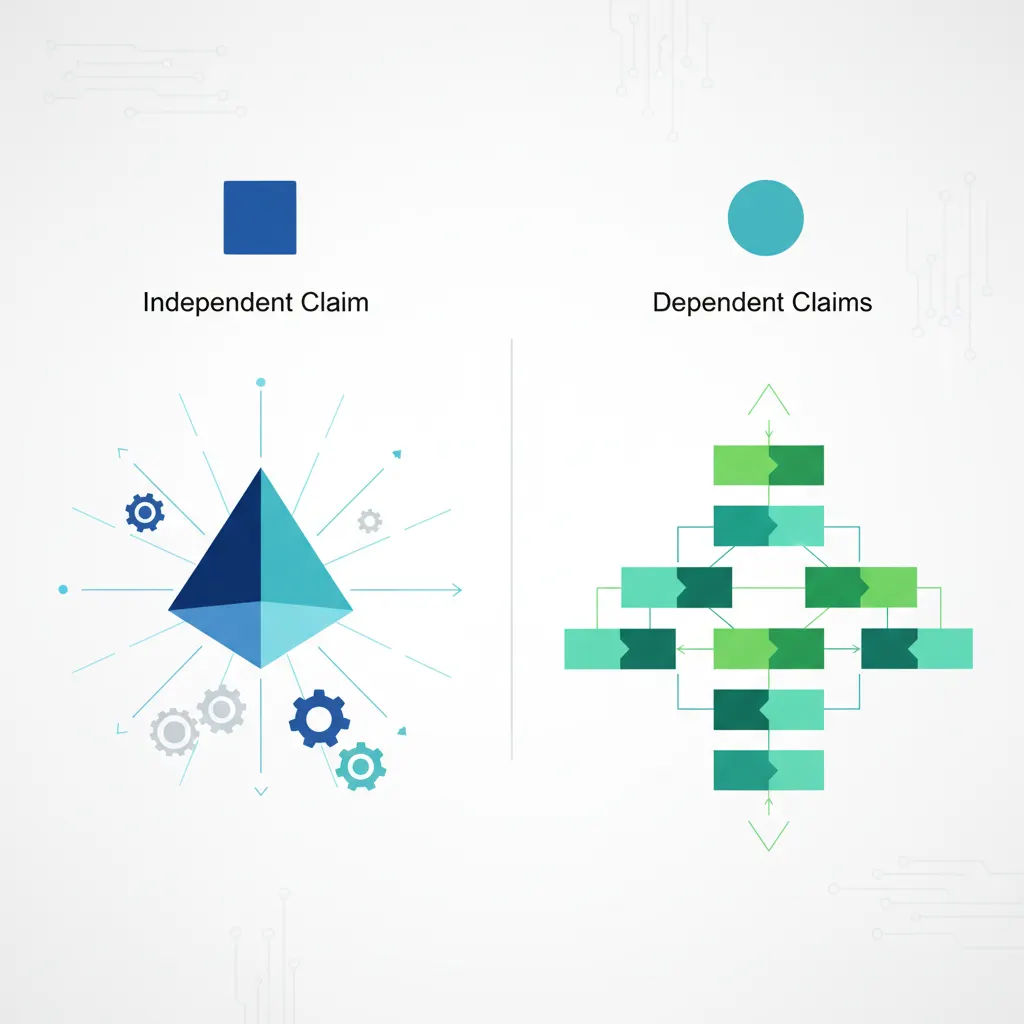
An independent claim? It is a self contained declaration. It defines the invention using the broadest terms. It encompasses all essential components of the invention, without relying on another claim. I typically start with independent claims when drafting a patent application. Reason? They lay the foundation for the entire scope of protection pursued. They are the bedrock of your patent strategy. This is a core part of Claim Drafting 101.
Independent claims have these characteristics:
- Self Contained: It does not depend on another claim for its meaning or legal scope. It stands alone, a fortress.
- Broadest Scope: It covers the invention in its most general form. Think of it as casting a huge net.
- Complete Definition: It lists all elements necessary to put the invention into practice. A recipe, complete with ingredients.
Consider this:
“A bicycle including: a frame; two wheels attached to the frame; pedals connected to a crank and a handlebar for steering.”
The example claim defines a basic bicycle without referencing another claim. It covers any bicycle including those four components, regardless of other features or parts. Simple.
A dependent claim refers back to one or more previous claims (independent or dependent). It adds further restrictions or details. Its reach narrows from the claim it depends on. It incorporates all the components of the parent claim plus the added features described in the dependent claim. A common error I see? Applicants do not grasp that a dependent claim can only narrow the claim’s scope. It cannot broaden it. Knowing types of patent claims is useful.
Dependent claims have these traits:
- Reference to a Parent Claim: It points back to a prior claim. Consider it a family tree.
- Narrower Scope: It adds limits, making it more specific than the parent claim. Fine tuning details.
- Incorporation by Reference: It includes all the elements of the parent claim. It inherits its ancestor’s traits.
Following the bicycle example, a dependent claim might state:
“The bicycle of claim 1, where the frame is made of aluminum.”
This claim depends on claim 1 (the independent claim). It adds the restriction that the frame is aluminum. It only covers bicycles with an aluminum frame possessing the features described in claim 1. Specificity becomes key.
Let us break down the core differences between independent and dependent claims:
| Feature | Independent Claim | Dependent Claim |
|---|---|---|
| Scope | Broadest | Narrower |
| Dependence | Stands alone | Depends on another claim |
| Elements | Includes all essential elements | Adds limitations to elements of parent claim |
| Purpose | Defines the invention in its most general form | Provides more specific protection and increases chances of allowance. |
A well crafted patent application strategically uses independent and dependent claims. It maximizes protection. The logic is this:
- Layered Protection: Independent claims offer broad protection. Dependent claims cover specific variations and embodiments. This establishes a multilayered defense against potential infringers. I have seen cases where an infringer might evade an independent claim. They still fall within the scope of a dependent claim. Having backup plans.
- Increased Enforceability: Dependent claims can enhance a patent’s enforceability. They provide clearer and more specific definitions of the invention. This is beneficial if litigation arises. Clarity helps in court.
- Fallback Positions: If an independent claim is invalidated during examination or litigation, dependent claims serve as fallback positions. They maintain some protection. Having a safety net.
- Navigating Prior Art: Dependent claims allow you to avoid existing prior art. Adding specific limits distinguishes your invention from what already exists. This is useful when attempting to file a patent in India. The patent laws can be stringent. Knowing the landscape is crucial.
Drafting effective patent claims? It is both an art and a science. I have learned these best practices:
- Start with the Independent Claim: Define the core invention in its broadest possible language. Make sure it covers all essential elements and functionalities. The foundation for everything.
- Add Dependent Claims Strategically: Introduce dependent claims adding specific features, materials or functionalities. Consider different variations and versions of your invention. Diversification.
- Use Clear and Precise Language: Avoid vague or ambiguous terms. Use language that is clear and concise. Leave no room for misinterpretation.
- Maintain Consistency: Make sure the claims are consistent with the description and drawings in the patent specification. Harmony between words and visuals.
- Review and Revise: Claims are difficult to amend once filed. Review and revise your claims carefully. Pay attention to grammar, punctuation and terminology. Scrutiny.
- Seek Expert Assistance: Working with a patent attorney or agent who has experience in your technology area? Their expertise can be invaluable. Invest in your future.
Claim drafting is tricky. Inventors often stumble on these mistakes:
- Overly Broad Claims: Claims that are too broad may be easily invalidated by prior art. Restraint.
- Overly Narrow Claims: Claims that are too narrow may be easily circumvented by competitors. Avoid loopholes.
- Lack of Antecedent Basis: Failing to clearly define terms or elements. Clarity.
- Use of Vague Terms: Using terms like “about,” “approximately” or “substantially” without clear definitions. Vagueness.
- Inconsistency with Specification: Claims that are not supported by the description in the patent specification. Harmony.
Claim construction? It is the process of interpreting the meaning and scope of patent claims. A critical step in patent litigation, the court’s interpretation of the claims determines whether infringement occurred. Patent independent versus dependent claims become important. The battleground on which patents are won or lost.
The goal of claim construction is to determine what someone with ordinary skill would have understood the claim terms to mean when the patent was filed. Courts rely on the patent specification, prosecution history and expert testimony. Context.
So what is the takeaway? Mastering claim drafting? Especially the difference between patent independent and dependent claims? Securing strong patent protection becomes essential. By understanding the characteristics, advantages and best practices, you can craft a patent application. It effectively protects your invention and maximizes its commercial value. The claims are the core of your patent. Their quality impacts the strength and value of your intellectual property. Patents thrive and fail based on claim drafting. Investing the time to get it right becomes time well spent.