
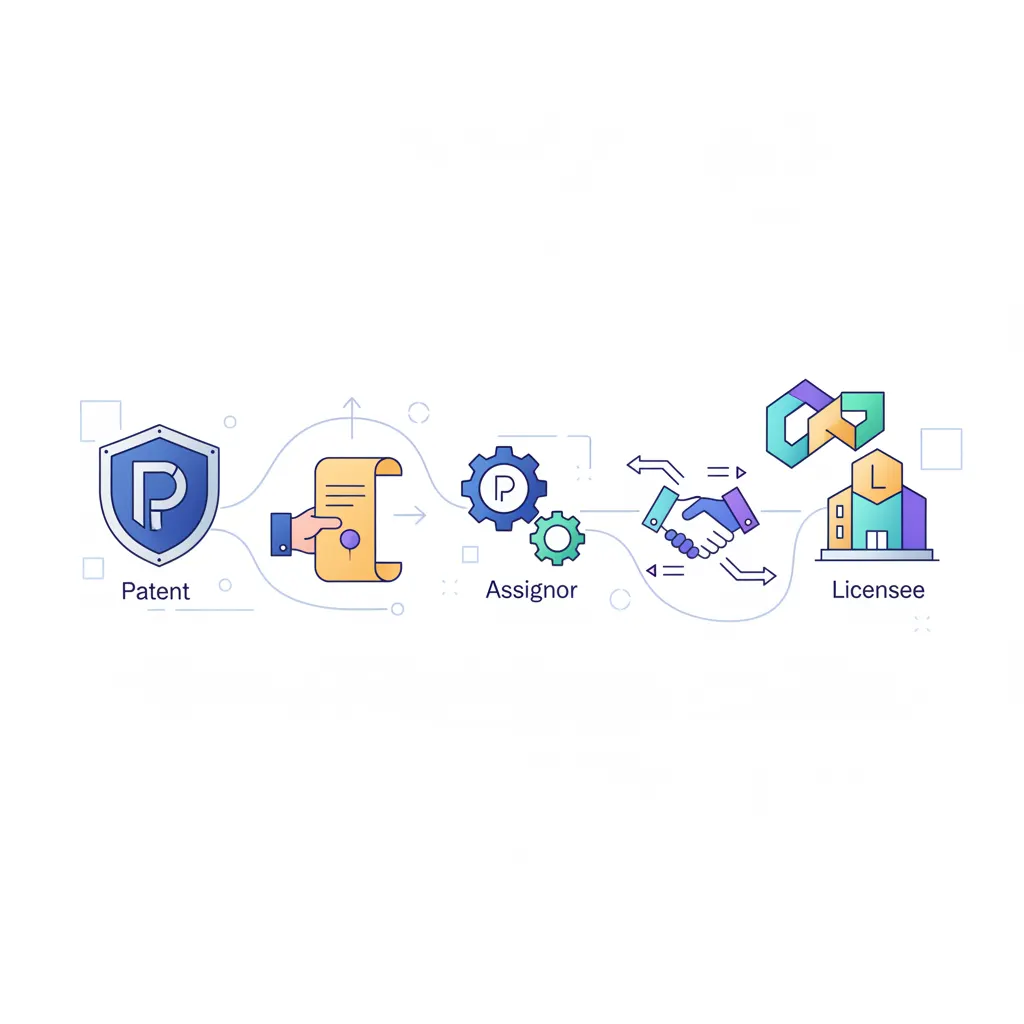
A staggering one in four patents ends up embroiled in legal battles. That number alone should be a wake up call, urging you to solidify your intellectual property strategy. Patents, the very essence of innovation, provide inventors with exclusive rights. But these rights? They are far from guaranteed. Owners can transfer them entirely or share them through meticulously crafted licensing arrangements. For innovators and enterprises venturing into India’s intricate IP marketplace, grasping the nuances between these two approaches is absolutely critical. I have personally witnessed brilliant concepts falter simply due to misunderstandings. This breakdown of patent assignment and licensing will equip you with the knowledge needed to make informed strategic decisions.
Patent Assignment Explained
Patent assignment means relinquishing control. The complete ownership of a patent transfers from you, the assignor, to another party, the assignee. Picture it as selling your primary residence; you relinquish all control. The assignee now holds the patent’s reins, authorized to exploit the innovation, prevent others from its use and even resell or license it further.
I often observe fledgling tech companies possessing groundbreaking patents yet lacking the capital to commercialize their inventions. Selling the patent to a larger organization equipped with established manufacturing and distribution capabilities? That can represent a mutually advantageous outcome.
Essential Elements of Patent Assignment Agreements
- Clearly Defined Parties: Articulate the identities of both assignor and assignee. Include their comprehensive legal designations and physical addresses. Leave absolutely no room for ambiguity.
- In Depth Patent Description: Include the patent registration number, the title of the innovation and the date of filing. Mitigate any potential misunderstandings.
- Rights Transfer Details: Declare unequivocally that all entitlements, titles and interests appertaining to the patent are transferred to the assignee.
- Financial Considerations: Specify the remuneration exchanged for the patent. A single upfront sum? Ongoing royalty payments? A combination of both? Document every detail.
- Governing Legal Framework: Specify the jurisdiction whose legal precedents will govern the stipulations of the agreement.
Patent Licensing: Renting Versus Selling
Patent licensing operates differently. As the patent proprietor, known as the licensor, you authorize another entity, the licensee, specific permissions to utilize, manufacture or distribute your invention. Critically, you retain ownership of the patent itself. Consider it as leasing your personal residence; you maintain ownership while granting temporary occupancy under specific conditions.
Certain enterprises amplify their market presence by licensing their proprietary technologies to partners across diverse geographic regions. This strategy enables them to generate revenue streams without committing substantial capital to establishing new operational infrastructures or acquiring specialized expertise.
Variations in Patent Licenses
- Exclusive: The licensee possesses the sole entitlement to exploit the patent within a defined geographic area. Not even the licensor is permitted to bestow such rights upon another party.
- Non Exclusive: The licensor retains the prerogative to grant licenses to multiple parties, thereby permitting simultaneous utilization of the innovation.
- Sole: An amalgamation of both approaches. The licensee secures exclusive privileges, while the licensor retains the right to exploit the patent.
- Compulsory: Under exceptional circumstances, such as a widespread public health crisis, governmental authorities might compel you to license your patent to a third party, in exchange for commensurate royalty payments.
Mandatory Provisions in a Patent License Agreement
- Scope of Rights: Define precisely the permissible activities of the licensee. Manufacture? Utilize? Distribute? A combination of all?
- Geographic Limitations: Delineate the specific regions where the licensee is authorized to exercise these rights.
- Duration of Agreement: Specify the temporal validity of the license.
- Financial Terms: Establish the applicable royalty rates, payment schedules and reporting obligations.
- Ownership of Improvements: Determine the ownership of any enhancements or modifications implemented to the patent during the term of the agreement and the licensing rights associated with such improvements.
- Termination Conditions: Enumerate the grounds for premature dissolution of the agreement, such as contractual breaches.
- Confidentiality Safeguards: Protect the licensor’s proprietary information by imposing strict confidentiality obligations upon the licensee.
- Liability Provisions: Assign responsibility for damages arising from the licensee’s utilization of the patent.
Indian Regulatory Context
Transacting business within India requires strict adherence to Indian legal statutes. The Indian Patents Act of 1970 serves as the authoritative reference. Compliance is absolutely essential to ensure the validity of your agreements. The procedure to file a patent in India is well defined and the licensing of patent or any assignment must stringently adhere to it.
Registration of your agreements with the Indian Patent Office is essential. This provides public notification and can mitigate future disputes. Seek counsel from IP attorneys specializing in Indian patent jurisprudence. I have observed enterprises bypass this critical step and subsequently incur significant penalties.
Evaluating the Options
Both patent assignment and licensing present distinct advantages. The optimal choice depends on your specific strategic objectives.
Advantages of Patent Assignment
- Immediate Capital Infusion: Receive a substantial upfront payment for your innovation.
- Resource Optimization: Reallocate internal resources toward your core business activities.
- Risk Mitigation: Transfer the onus of commercialization and protection to another entity.
Advantages of Patent Licensing
- Sustained Revenue Stream: Generate ongoing income through royalty payments.
- Market Expansion: Access new markets without incurring substantial capital expenditures.
- Proprietary Control: Retain ownership of the patent and exercise control over its deployment.
Illustrative Examples
Here are a few practical illustrations of patent assignment and licensing in practice:
- Scenario One: A small Indian biotechnology firm develops a novel drug delivery mechanism. Lacking the resources for large scale manufacturing, the firm sells the patent to a major pharmaceutical corporation in exchange for an upfront payment and ongoing royalty payments.
- Scenario Two: An Indian engineering enterprise patents a highly energy efficient electric motor. The enterprise licenses the technology to manufacturers across the globe, generating revenue while retaining ownership.
These examples illustrate how licensing of patent and assignment can serve different corporate objectives.
Navigating the Legal Landscape
Patent assignment and licensing can be inherently complex. Retain legal counsel to safeguard your interests and ensure the integrity of your agreements. This is especially critical for international transactions, where disparate legal systems come into play. It is vital that any agreement related to a patent license agreement undergoes scrutiny by a qualified legal expert.
Conclusion
Whether selling your patent outright or sharing it via licensing, understanding the nuances, the regulatory framework and the strategic ramifications is crucial. Patent assignment and licensing represent potent mechanisms to enhance the value of your IP portfolio and stimulate innovation. Thoughtful consideration, expert guidance and judicious decision making are paramount to aligning these strategies with your overarching business objectives. To file a patent in India, understand all the implications of how that patent can be sold licensed or assigned.