
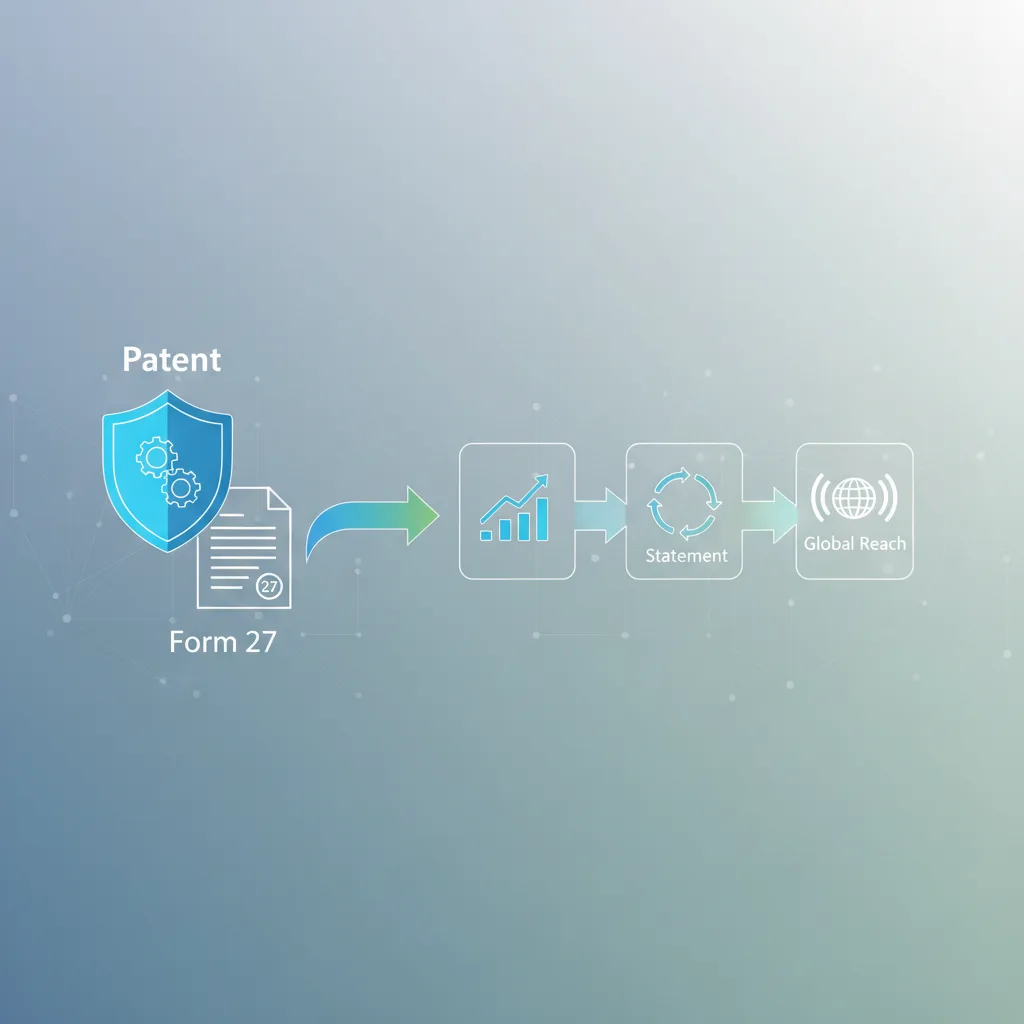
Imagine the frustration of navigating complex legal requirements, especially concerning compliance. When I consider keeping a patent active in India, the accurate and timely filing of the Patent Working Statement, known as Form 27, is non negotiable. This statement gives the Indian Patent Office critical details on how a patented invention has been commercially applied within India. It is not as simple as it seems; let us unpack the details, deadlines and important angles of Form 27.
What is a Patent Working Statement (Form 27)?
The Indian Patents Act of 1970 grants inventors control over their inventions. It also spurs fresh thinking and confirms inventions are commercially used in India without delay. The Patent Working Statement, or Form 27, represents how patent holders and licensees with exclusive or nonexclusive rights declare their patented inventions being applied for business within India.
Think of it this way: It is a patent’s progress report, displaying an active role in India’s technology and financial growth to the Indian Patent Office. Skipping this step carries consequences.
Who Must File Form 27?
Every patent holder and licensee, whether exclusive or nonexclusive, must file a Patent Working Statement for each patent held in India. That covers:
- Individuals
- Companies
- Organizations
- Any group holding a patent or a license for a patent in India
Even if a patent saw no commercial use, a statement explaining why is still needed.
What is the Deadline for Form 27?
Form 27 needs filing each year, within three months after each calendar year ends. That puts the deadline at March 31st of the next year. For instance, the statement covering 2023 has to be filed before March 31st, 2024.
Missing that deadline brings penalties, so marking the calendar and filing on time pays off.
What Information is Needed for Form 27?
Expect to offer detailed information on Form 27 regarding how a patented invention supports business in India. The details include:
- Whether the invention has been used or not: A clear declaration is needed. State plainly whether the invention has seen commercial use in India during the covered period.
- If not used, the reasons why and the steps taken to use the invention: Provide full reasons if the invention remains unused. Acceptable reasons range from regulatory delays to soft market interest or ongoing research. Also, lay out the actions being pursued to introduce the invention.
- If used, the quantity and value (in rupees) of the patented product: When the invention has been used, detail how much of the patented product was made in India and its value in Indian rupees.
- Details on products imported from other countries: Specify the quantity and value (in rupees) of any patented product brought in from other countries, plus those countries’ names.
- Licenses and sublicenses granted during the year: Reveal any licenses or sublicenses granted for the patent during the year in question, along with the licensees’ names and addresses.
- Whether the public requirement has been met, at a reasonable price, partly, adequately or to the fullest extent: This forms a critical piece of the statement. Judge if the invention has served the public’s needs at a fair price.
What to Do and Not Do When Filing Form 27
Bear these guidelines in mind when filing Form 27. Doing so confirms compliance and sidesteps potential penalties:
What to Do:
- Begin early: Gathering necessary information at the last minute adds stress. Collecting data throughout the year streamlines the filing process.
- Maintain accurate records: Keep complete records of all manufacturing, sales and import actions tied to the patented invention.
- Be honest and open: Ensure the information in the statement is precise and factual. False or misleading details carry heavy penalties.
- Get professional advice: If unsure about any part of filing, speak with a patent attorney or agent.
- Attach supporting documents: Bolster the statement with documents such as sales invoices, import documents and licensing agreements.
What Not to Do:
- Do not miss the deadline: Late filings trigger fines and other penalties.
- Do not provide false information: Giving false or misleading information constitutes a serious offense, possibly leading to imprisonment and fines.
- Do not assume nonuse is acceptable: A valid explanation remains crucial, as are details on steps taken to bring it to market, even if the invention lacked commercial use.
- Do not underestimate this form: While easily seen as a mere formality, it exerts influence on a patent’s validity.
What are the Penalties for Not Complying?
Failing to file the Working Statement of Patents in India or giving false information carries significant consequences. The Indian Patents Act lists penalties for noncompliance, for example:
- Fine: A fine reaching INR 1 million.
- Imprisonment: A prison term lasting up to six months for giving false information.
- Both: A combination of a fine and imprisonment for those providing false information.
What is more, not adequately using a patent might bring compulsory licensing, where the government lets a third party produce and sell that invention without permission.
How Form 27 Relates to Compulsory Licensing
The information on Form 27 decides if a patent is adequately used in India. If the Controller of Patents judges that reasonable public needs remain unmet, they might issue a compulsory license to a third party to use the invention.
This becomes important if the patent holder imports the patented product instead of making it in India or sets sky high prices, locking out the public.
Take the case of Natco Pharma Ltd. v. Bayer Corporation as a key example. Natco gained a compulsory license to make a generic version of Bayer’s cancer drug, Nexavar. The Controller found Bayer had not adequately used the patent in India. The drug’s high price prevented it from meeting the public’s reasonable needs.
What are the Recent Changes to Form 27 Requirements?
Form 27’s requirements shift. Keeping up with rules and guidelines from the Indian Patent Office is essential. Specific details about revenue from a patented invention once needed providing. Now, compliance is easier for patent holders. The Patent Working Statement remains a vital document.
To stay current, visit the Indian Patent Office’s official website frequently and sign up for their newsletters. It might also help to file a patent in India to stay informed.
Conclusion
Filing the Patent Working Statement (Form 27) is essential for patent holders and licensees in India. Knowing the requirements, deadlines and potential consequences of noncompliance helps keep a patent valid. It also helps contribute to India’s technological and economic progress. Keep detailed records, seek professional guidance when needed and offer truthful information in the statement. The Indian Patent Office supplies the forms and guidelines to help. Stay informed, comply and defend intellectual property rights.