
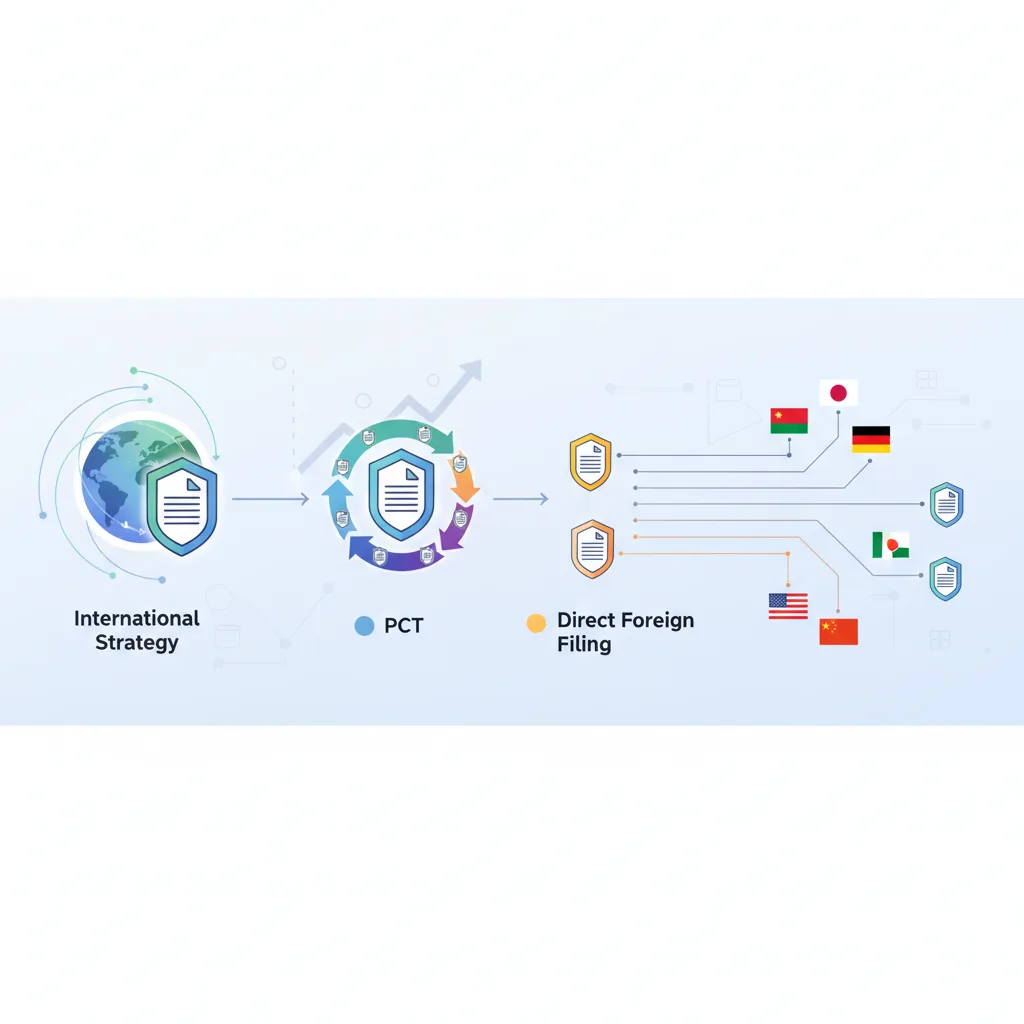
Imagine a company’s secret sauce, its intellectual property. Did you realize that those ideas bubbling in people’s heads can represent as much as 70% of what the entire company is worth? That is why securing international patent protection is not some optional extra; it’s absolutely vital if you have got designs on growing and dominating your market. As businesses eye expansion onto the global stage, a crucial question arises: what is the smartest way to safeguard their inventions across numerous countries? Typically, companies weigh two primary approaches: using the Patent Cooperation Treaty (PCT) or directly filing in individual foreign nations. Each path has its own set of advantages and disadvantages, making the choice a deeply strategic one, intrinsically linked to your specific situation. International Patent Filing success hinges on a well thought out plan.
Over the years, my firm has guided countless clients through this pivotal decision. I have personally witnessed how choosing correctly can open doors to significant new opportunities and conversely, how mistakes can be devastating. I want to distill the crucial elements of international patent filing, providing you with the insights needed to make informed decisions and defend your inventions effectively. Consider this your strategic advantage.
Understanding the PCT Route
The World Intellectual Property Organization (WIPO) oversees the Patent Cooperation Treaty. It offers a streamlined method for pursuing patent protection in a multitude of countries. See it as a launching pad for your patent application. By submitting a single “international application,” you can simultaneously seek protection in more than 150 member states. This is your opening gambit.
Here is the crucial point: The PCT itself does not issue patents. Instead, it establishes a framework that enables you to postpone filing individual national applications while locking in an early priority date. This buys you valuable time to assess market potential and fine tune your plans for bringing your invention to market. It is essentially hitting the brakes, strategically.
Benefits of the PCT
- Extended Timeline: The PCT process grants applicants a generous window, up to 30 or 31 months from their initial filing date, to decide which countries to actively pursue patent protection in. This extra breathing room proves invaluable, particularly for startups and smaller players just dipping their toes into international waters.
- Cost Deferral: A PCT application lets you push back the significant expenses tied to translations and national filing fees. This provides welcome financial flexibility when budgets are tight.
- International Search Report: The PCT process incorporates an international search report coupled with a written opinion evaluating your invention’s patentability. This delivers crucial feedback on the novelty and inventive merit of your application before you commit to filing in individual countries.
Drawbacks of the PCT
- No International Patent: Let us reiterate: the PCT does not award a global patent. Ultimately, you must jump into the “national phase” in each country where you are seeking protection. This translates to further expenses.
- Potential for Higher Overall Costs: While the PCT postpones expenses, the total tab could exceed that of direct filing if you end up pursuing protection in a large number of countries. Carefully weigh your options.
- Delayed Grant: Obtaining a patent grant through the PCT typically takes longer compared to direct filing because of the extended timelines built into the process. Patience is key.
Exploring Direct Foreign Filing
Direct foreign filing involves submitting individual patent applications directly to the patent offices of each country where you desire protection. This approach skips the PCT system entirely. It is a far more immediate strategy. It may also allow you to file a patent in India much quicker.
Advantages of Direct Filing
- Faster Grant Potential: Direct filing can accelerate the patent grant process in certain countries. This can be a major plus in fiercely competitive industries where every second counts.
- Cost Effectiveness (sometimes): If your sights are set on just a handful of countries, direct filing might prove more economical than going the PCT route. Crunch the numbers to be sure.
Disadvantages of Direct Filing
- Limited Decision Time: You are on the clock with direct filing. You must file directly in each country within 12 months of your initial patent application filing date. This compresses the time you have for market assessment and strategic planning. Time is of the essence.
- Increased Initial Complexity and Costs: Direct filings demand strict adherence to each country’s specific filing requirements, encompassing translation and attorney fees. This results in higher upfront costs.
- Lack of International Search Report: Unlike the PCT path, direct filing does not furnish an international search report to aid in evaluating the patentability of your invention. You are going in blind.
PCT vs Direct Filing: A Strategic Comparison
Choosing between the PCT and direct filing is rarely a black and white decision. A number of factors need consideration. For instance:
- Geographic Scope: Are you pursuing protection across a broad spectrum of countries or concentrating on a select group of core markets?
- Budget: What funds have you earmarked for securing international patent protection?
- Time Sensitivity: How rapidly do you need to lock down patent protection in your target markets?
- Commercialization Strategy: Have you definitively pinpointed your target markets, or are you still weighing your options?
Consider a startup company pioneering a groundbreaking medical device. They might lean toward the PCT to defer expenses and size up potential markets before committing to national filings. Conversely, a major pharmaceutical company seeking swift protection for a blockbuster drug in key markets like the United States and Europe might favor direct filing. The best approach hinges on your unique circumstances. This PCT vs Direct Filing decision can make or break your company.
The Indian Perspective: Outbound Patent Filings
For Indian companies venturing into international patent protection, both the PCT and direct filing represent viable avenues. India’s Patents Act of 1970 mandates that applicants initially file in India or secure permission from the Controller General of Patents before filing elsewhere. This ensures that innovations with potential national security implications are not prematurely disclosed. This is an important precaution. Understanding the pct in ipr is essential.
The PCT can prove especially advantageous for Indian startups. It affords them valuable time to gauge international expansion opportunities before incurring substantial costs. Larger Indian corporations often adopt a hybrid strategy, filing directly in key markets while leveraging the PCT to maintain flexibility in other regions. This provides an optimal blend of options.
Also, keep in mind the ability to file a patent in India initially. You can then move forward with your international filings.
Key Considerations for PCT vs Direct Filing
Regardless of the path you choose, bear these points in mind:
- Patent drafting is paramount: A meticulously crafted patent application stands as absolutely crucial for success with both the PCT and direct filing. A poorly constructed application can trigger far reaching negative consequences across numerous countries. Sweat the small stuff.
- Patents are territorial: Patent protection extends only to those countries where you actively file for and obtain a patent. Enforcing your patent necessitates navigating the legal systems of individual countries. You must adhere to their rules.
- Seek expert advice: Consulting with a seasoned patent attorney is indispensable for formulating an international patent filing strategy that aligns with your business objectives. Do not go it alone; expertise matters.
Understanding the pct in ipr
The intellectual property rights (IPR) terrain can appear daunting. However, grasping the PCT system is paramount for any company pursuing global patent protection. Do not hesitate to enlist professional assistance to effectively navigate this intricate area. You do not want to lose your way. Knowing how to file a patent in India is also essential.
So, what’s the takeaway? The decision between the PCT and direct foreign filing represents a strategic crossroads demanding a thorough assessment of your specific circumstances. By fully understanding the benefits and drawbacks inherent in each approach, you can forge an international patent filing strategy that effectively safeguards your innovations and underpins your business ambitions. International patent filing is not merely a legal formality; it embodies a pivotal investment in your company’s enduring success. Secure your future!