
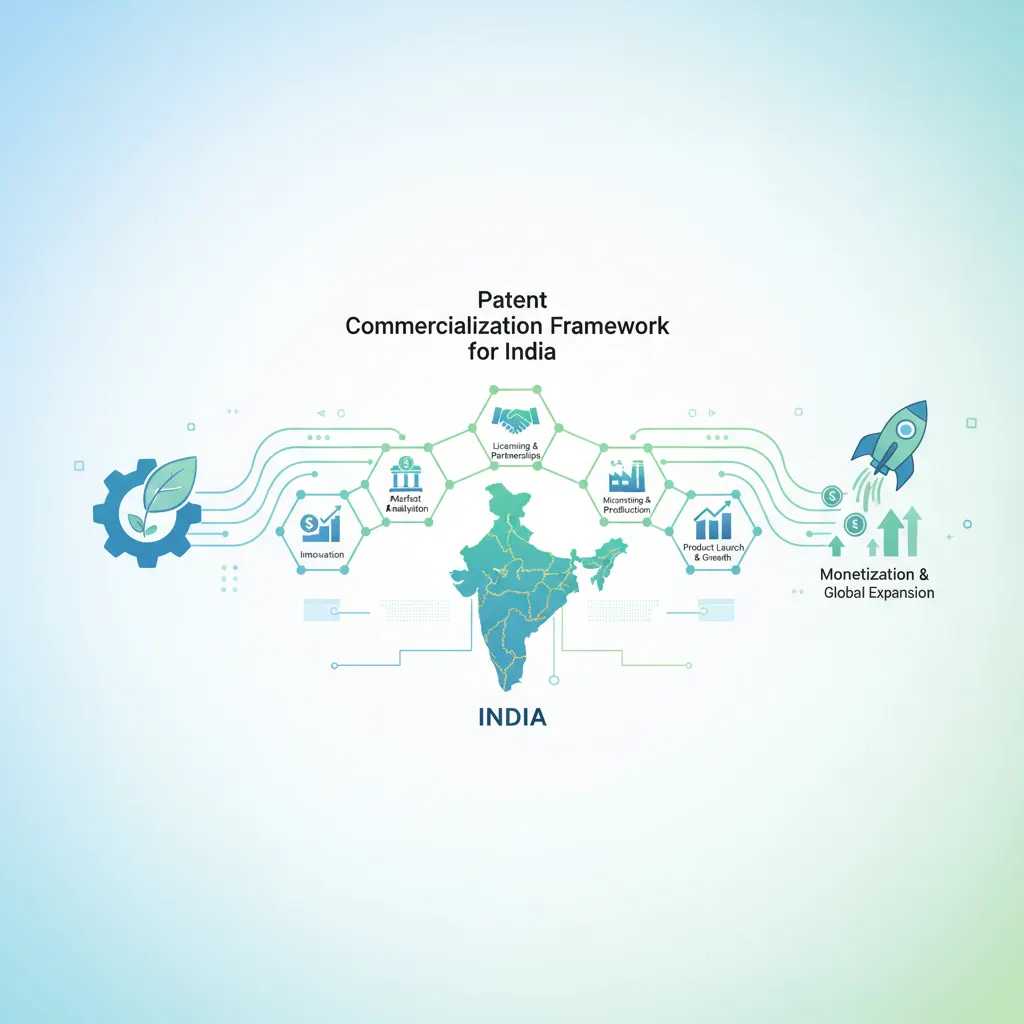
India sees a deluge of patent applications annually. A 2022 report revealed a considerable surge, hinting at a growing appreciation for intellectual property’s true worth among those looking to file a patent in India. But let us be clear: securing a patent is just the opening move. The real test, as I have come to see it, lies in transforming that patent into a money making product. This is particularly true in India, where inventors wade through a tangled thicket of legal and market forces.
I have seen inventors run into roadblocks firsthand. They mistakenly assume that landing a patent signals the end of the road. Far from it. It is merely the starting gun. A patent gathering dust is a lost opportunity. My colleagues and I have guided clients from initial patent filing all the way to a triumphant product launch. Consider this a practical guide to patent commercialization in India. My aim is simple: to help you deftly maneuver around these hurdles and unlock maximum value from your groundbreaking ideas. The soul of innovation resides not just in the invention itself, but in its journey to the marketplace.
Anatomy of the Indian Patent System
Before we get into the nitty gritty, a solid grasp of the Indian patent system is essential. India operates on a “first to file” basis. Generally, that means the first person to submit a patent application gets the rights. It does not matter who conceived of it first. That is why speed is paramount. Hesitate, and someone else might reap the rewards of your ingenuity.
The Patents Act of 1970, along with its subsequent amendments, governs patent regulations in India. This law spells out what can be patented, how to get a patent and what rights patent holders have. The Controller General of Patents, Designs and Trademarks is in charge of the patent office. Understanding all this is the foundation for successful patent commercialization. It is the price of entry.
A Hands On Approach to Patent Commercialization
In my experience, a well conceived strategy dramatically improves your chances of successfully commercializing a patent. I have broken down the process into five distinct phases. Treat this as a battle plan.
Phase 1: Patent Evaluation
Not all patents are created equal. Your initial task is to gauge the inherent potential of your patent. That means examining:
- Technical Feasibility: Can the invention be mass produced?
- Market Demand: Is there a real need for this? What is the potential market size?
- Competitive Landscape: Who else is offering similar products? Is your patent superior in some way?
- Freedom to Operate (FTO): Does your invention infringe on existing patents? An FTO search is vital to avoid legal problems down the road.
Based on your assessment, you can figure out the patent’s true worth. There are several ways to do this, including:
- Cost Approach: Calculate the costs involved in independently developing a similar invention.
- Market Approach: Compare your patent to comparable patents that have been sold or licensed before.
- Income Approach: Estimate how much revenue the patent is likely to generate going forward.
A realistic valuation is essential when seeking investments or licensees. Without it, you are taking a shot in the dark.
Phase 2: Charting Your Commercialization Course
Once you know your patent’s financial value, you must develop a commercialization strategy. Ponder these options:
- Direct Manufacturing and Sales: Manufacture and sell the product yourself. This calls for a large investment in infrastructure, advertising and distribution channels.
- Licensing: Grant another party the right to use your patent in exchange for royalty payments. This could be a good option if you lack the resources or skills to manufacture and sell the product yourself.
- Sale: Sell your patent ownership outright. You get a one time payment, but you surrender all future rights.
- Joint Venture: Form a partnership with another company. This gives you access to resources and skills that you might not have otherwise.
- Spin off Company: Create a new company focused on commercializing the patent. This strategy makes sense when the patent has the potential to support a standalone business.
The best choice hinges on your specific situation, including financial resources, expertise and willingness to take risks. Weigh your choices carefully. This is a critical juncture.
Phase 3: Patent Protection
Simply owning a patent is not enough; you must defend it vigorously. This entails:
- Market Monitoring: Watch out for potential copycats.
- Patent Enforcement: Take legal action against anyone who infringes on your patent rights.
- Patent Maintenance: Pay all required fees to keep your patent active.
In India, patent disputes can be complicated and lengthy. Competent legal representation is a must for self preservation. Do not take this lightly.
Phase 4: Market Introduction
Even a brilliant invention can fail without proper market introduction. Getting the word out is a cornerstone of patent commercialization. Your promotional campaign should include:
- Marketing Plan Development: Determine your target audience and the best ways to reach them.
- Marketing Materials Creation: Create brochures, websites and other content that showcases your invention.
- Trade Show Attendance: Trade shows provide excellent opportunities for building relationships with customers and partners.
- Public Relations: Seek media coverage to generate publicity for your invention.
Word of mouth can be powerful in India. Use your contacts and build rapport with key people. It can make a big difference.
Phase 5: Securing Financial Backing
Patent commercialization can be expensive. You might need outside capital, potentially from angel investors, venture capital firms or government grants. Develop a persuasive business plan that outlines the market opportunity, your commercialization strategy and your financial projections. A well prepared plan is your strongest asset. Do not leave home without it.
India offers several government programs designed to encourage innovation. Investigate these options and use them to your advantage. They are there for the taking.
Unique Challenges in India
Commercializing patents in India presents a specific set of challenges:
- Bureaucracy: The Indian bureaucracy can be cumbersome. Expect delays and paperwork.
- Infrastructure: Indian infrastructure is still developing. This can complicate manufacturing and distribution efforts.
- Intellectual Property Enforcement: Protecting your intellectual property rights in India can be difficult. Be ready to fight any patent infringements.
I often advise clients to build relationships with local partners. Their knowledge of the Indian market and regulatory environment can provide valuable insights. Local know how is essential. It is the ultimate inside edge.
Conclusion
Patent commercialization in India calls for a proactive and persistent approach. By using this framework and understanding the specific obstacles in the Indian market, you can significantly increase your chances of success and fully realize your invention’s true value. A patent is not the end of the line. It is a launching pad. Treat it as a valuable asset and pursue its market launch with determination.