
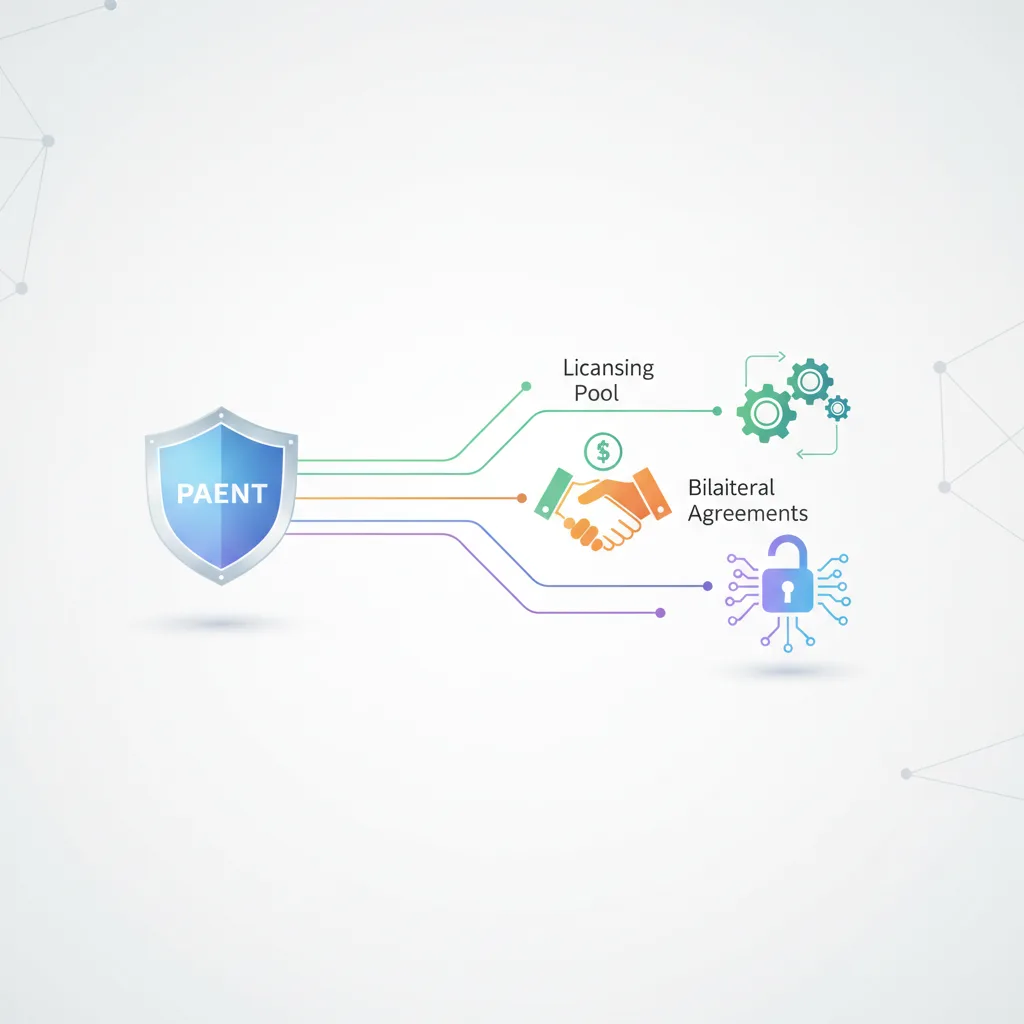
I nearly choked on my coffee when I saw a report revealing that patent licensing injected billions of dollars into the American economy in 2022 alone. Seriously? A piece of paper? Suddenly, patents appeared in a new light. Licensing of patents is not just for massive companies; it is a real opportunity for almost anyone to transform ideas into income. How does this all work? Let me explain, and I will even share some tips I have picked up along the way.
Consider patent licensing as similar to renting out an apartment. You, as the patent holder (the licensor), permit another party (the licensee) to use, sell or manufacture your patented creation. In exchange, they pay you royalties or provide other benefits. I think of it as a true mutually beneficial arrangement. You generate income, and they gain access to technology they may not have been able to develop themselves. Patent Licensing has become critical in modern business strategy.
Understanding Patent Licensing Options
Patent licensing is not one size fits all. It appears in many forms, each designed for particular situations. Here is a summary of the most prevalent options:
- Exclusive License: Imagine giving someone complete control of your invention, but restricted to a specific geographic area or application. With an exclusive license, you cannot license your patent to anyone else for that defined area. The licensee obtains first and only access.
- Non Exclusive License: This is like letting multiple people borrow your lawnmower. You can issue licenses to as many entities as you want, allowing each of them to utilize your patent. This is often a more popular and less expensive option.
- Cross License: Picture two technology businesses trading access to their patent portfolios. That is cross licensing. It is typical in industries where products rely on a set of various patented technologies.
- Compulsory License: There are instances when governments can force you to license your patent to a third party, even if you disagree. This typically occurs during public health emergencies or when national security is at risk.
Essential Factors for Successful Patent Licensing
Patent Licensing presents challenges. I have witnessed deals fall apart because people ignore essential steps. Here is what you absolutely must consider:
- Patent Strength: A robust, well protected patent is more attractive to potential licensees. Verify that your patent is valid and enforceable before reaching out to anyone.
- Market Analysis: Who are your possible licensees? What is the need for your invention? Understanding the competitive landscape enables you to negotiate better licensing arrangements.
- Clear Licensing Agreement: A poorly drafted agreement encourages future disputes. Explicitly state everything: the scope of the license, royalty rates, payment schedules and termination conditions.
- Royalty Rates: Deciding the appropriate royalty rate is both art and science. I assess the industry, the value of the patent and the licensee’s projected profit margins. Industry benchmarks and expert opinions provide useful information.
- Enforcement: Be ready to defend your patent rights if the licensee infringes on your patent or violates the licensing agreement. It happens.
Patent Licensing: A Strategic Game Plan
Effective patent licensing demands strategy. I always start with a detailed assessment of my patent portfolio. Which patents offer the highest value? Which have the greatest market potential? Next, I consider my objectives. Am I trying to generate fast revenue, enter new markets or prevent others from copying my invention?
Here are the strategic actions I take:
- Identify Potential Licensees: Look for companies that could truly benefit from your technology. Target those already active in the market or those aiming to break into it.
- Develop a Compelling Pitch: Create a presentation that emphasizes the value of your patent and the prospective benefits for the licensee. Ensure they grasp the opportunity.
- Negotiate Effectively: Expect compromises on the licensing agreement terms. Be flexible, but stand your ground when defending your rights.
A patent can be licensed in several ways, depending on your specific situation and goals. Often, it starts with direct negotiation with possible licensees. I have learned that this involves pinpointing the right companies, showing the value proposition of your patented technology and agreeing on details such as royalty rates, exclusivity and the license duration. It is complicated, but worthwhile.
Patent brokers and licensing agencies exist. They specialize in connecting patent owners with prospective licensees. These specialists can simplify the licensing process and help you negotiate beneficial arrangements. Think of them as matchmakers for innovation.
Filing a Patent in India: A Gateway for Licensing
Thinking about expanding into India? If you are, file a patent in India to protect your intellectual property and unlock fresh licensing opportunities. India boasts a large and growing market, making it an appealing location for businesses to commercialize their inventions. The Indian patent system adheres to the Patents Act of 1970 and the Patents Rules of 2003. Adhere to these rules to maintain your patent valid and enforceable. I deem it essential.
To file a patent effectively in India, you will require a detailed patent specification, including a description of your invention, claims and drawings (if applicable). I highly recommend seeking assistance from a qualified patent attorney or agent who understands the complexities of Indian patent regulations and procedures.
The Trajectory of Patent Licensing
Patent Licensing is constantly evolving. The increase in open innovation and collaborative research creates new ways for patent owners to profit from their intellectual property. As technology becomes more complex and interconnected, cross licensing agreements will likely become even more common. Keep an eye on this area.
So what is the takeaway? Patent Licensing is a powerful mechanism for converting intellectual property into revenue and promoting innovation. By understanding the different licensing options, key considerations and strategic approaches, patent owners can realize the full potential of their inventions. Whether you are a small startup or a large corporation, licensing of patent assets can help you generate revenue, broaden your market reach and stay ahead of competitors. Patent Licensing offers substantial benefits.