
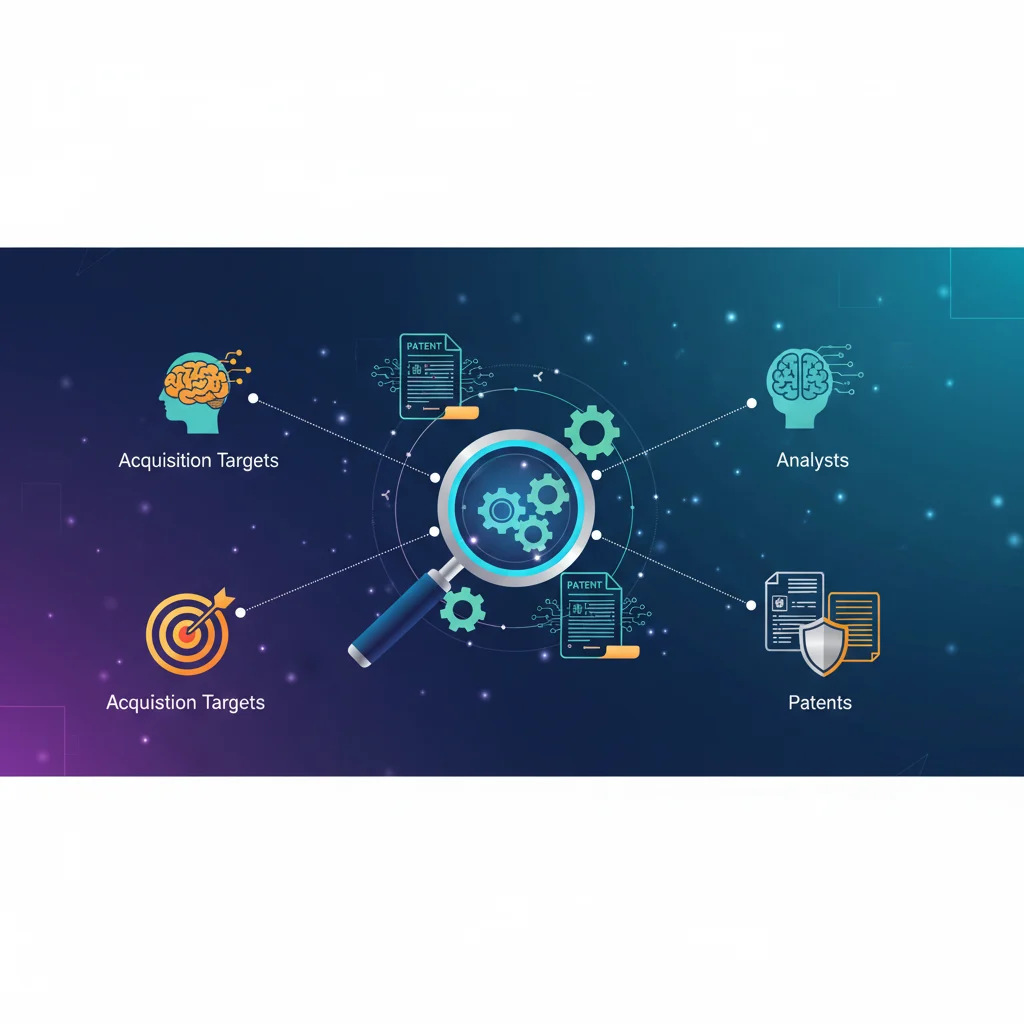
Here is a hard truth: approximately 75% of corporate mergers ultimately do not provide any benefit to the acquiring entity. One Harvard Business Review study points to a crucial reason: an incorrect understanding of the true worth of the target. This is the scenario where patent analytics can be extremely helpful, changing the methods that companies and analysts use to identify and assess possible acquisition targets.
Historically, companies depended on standard measurements such as revenue and market size to assess potential acquisitions. These numbers often do not tell the whole story, particularly given the extremely rapid rate of technological development. Conversely, a company’s patent collection provides a detailed look at its creative abilities, competitive advantages and future path. Understanding how to file a patent in India, for example, could be a window into a company’s global strategy.
The Power of Patent Analytics in Identifying Acquisition Targets
Patent analytics provides a methodical and information based method to identify companies possessing valuable intellectual property. By closely examining patent specifics, I can reveal overlooked possibilities: companies with innovative technologies that might not yet be obvious from their financial documents. This is particularly important in sectors driven by innovation, where future successes are dependent on strong IP protections.
Instead of merely depending on historical performance data like revenue, patent analytics enables evaluation of future oriented indicators: the patents a company has sought, the technologies being developed and the markets being pursued. This future focused viewpoint is indispensable when predicting which companies are ready for expansion and are therefore attractive acquisition targets.
I utilize patent analytics to interpret the technological environment, identify the dominant participants and assess the competitive pressures within particular fields. This allows provision of advice to clients regarding possible acquisition targets that are in line with their general goals and unlock synergistic opportunities.
Key Patent Metrics for Evaluating Acquisition Targets
When assessing a possible acquisition target’s patent assets, the focus is on several important measurements:
- Patent Quality and Impact: Patents possess differing levels of value. Patent worth is determined through examination of aspects like claim count, protection range and citation frequency in other patents. Patents with high citation numbers generally possess greater weight and influence.
- Patent Family Size and Geographic Coverage: A patent family includes a collection of patents submitted across various countries to protect the same invention. A large patent family possessing broad geographic coverage indicates a firm is dedicated to protecting its IP on a worldwide level and has identified important markets for its technology.
- Technology Focus and Emerging Trends: The patent collection is examined to determine a firm’s primary technology strengths and assess its involvement in emerging trends. Companies possessing strong patent positions in rapidly growing fields often become attractive acquisition targets.
- Patent Age and Remaining Term: A patent’s age and its remaining duration are essential factors. Older patents approaching expiration might possess less value compared to newer patents possessing longer durations.
- Freedom to Operate (FTO): A freedom to operate analysis determines whether the target company’s patents infringe upon existing patents held by other organizations. This assists in evaluating the possible risks related to acquiring the company’s IP.
Real-World Examples: Patent Analytics in Action
Several prominent acquisitions emphasize the usefulness of patent analytics in identifying worthwhile targets:
- Google’s Acquisition of Nest: In 2014, Google acquired Nest, a smart home device manufacturer, for $3.2 billion. While Nest possessed a comparatively small market presence at that time, its patent collection pertaining to smart thermostats and smoke detectors proved exceptionally valuable. Patent analytics demonstrated that Nest’s patents started new trends and included fundamental elements of smart home technology.
- Apple’s Acquisition of PA Semi: Apple acquired PA Semi, a chip designer, for $278 million in 2008. PA Semi had a team of experienced chip designers and a patent collection focused on low power processors. Patent analytics showed that PA Semi’s technology surpassed existing solutions and could enable Apple to improve the performance and energy efficiency of its mobile devices.
- Microsoft’s Acquisition of LinkedIn: While LinkedIn was an established business possessing a large user base, patent analytics confirmed the strategic value of the acquisition. LinkedIn possessed patents related to social networking, data analytics and professional networking, which fit Microsoft’s goals of growing its cloud services and data capabilities.
The Process: How We Use Patent Analytics to Find Acquisition Targets
My patent analytics strategy involves a multi stage process:
- Define the Search Criteria: Clients work with me to determine the specific technology areas, market segments and strategic objectives that are relevant to their acquisition strategy.
- Search and Collect Patent Data: Specialized patent databases and search tools are used to identify companies possessing patents in the defined areas.
- Analyze the Patent Portfolio: The patent collection is closely examined using the measurements described above to assess the patents’ value, impact and strategic importance.
- Identify Potential Targets: A list of companies that represent attractive acquisition targets is prepared based on my assessment.
- Conduct Due Diligence: Further due diligence is performed on the possible targets, including financial analysis, market research and legal review.
Looking Ahead: The Future of Patent-Driven Acquisitions
As technology advances at an increasing rate, patent analytics will become even more important in identifying and assessing acquisition targets. Companies that utilize this information driven strategy will gain a competitive advantage in making well informed decisions and creating value through strategic acquisitions.
I believe that patent analytics is more than a mere tool for identifying acquisition targets; it is a strategic requirement for companies seeking to maintain a lead in the current competitive environment. By utilizing the strength of patent intelligence, clients can be guided toward discovering hidden value and achieving their strategic goals.
So what is the lesson? Never disregard the influence of patents. Through thorough examination of a company’s patent collection, analysts gather valuable information that standard financial measurements often overlook, creating opportunities for more informed and more successful acquisition strategies.