
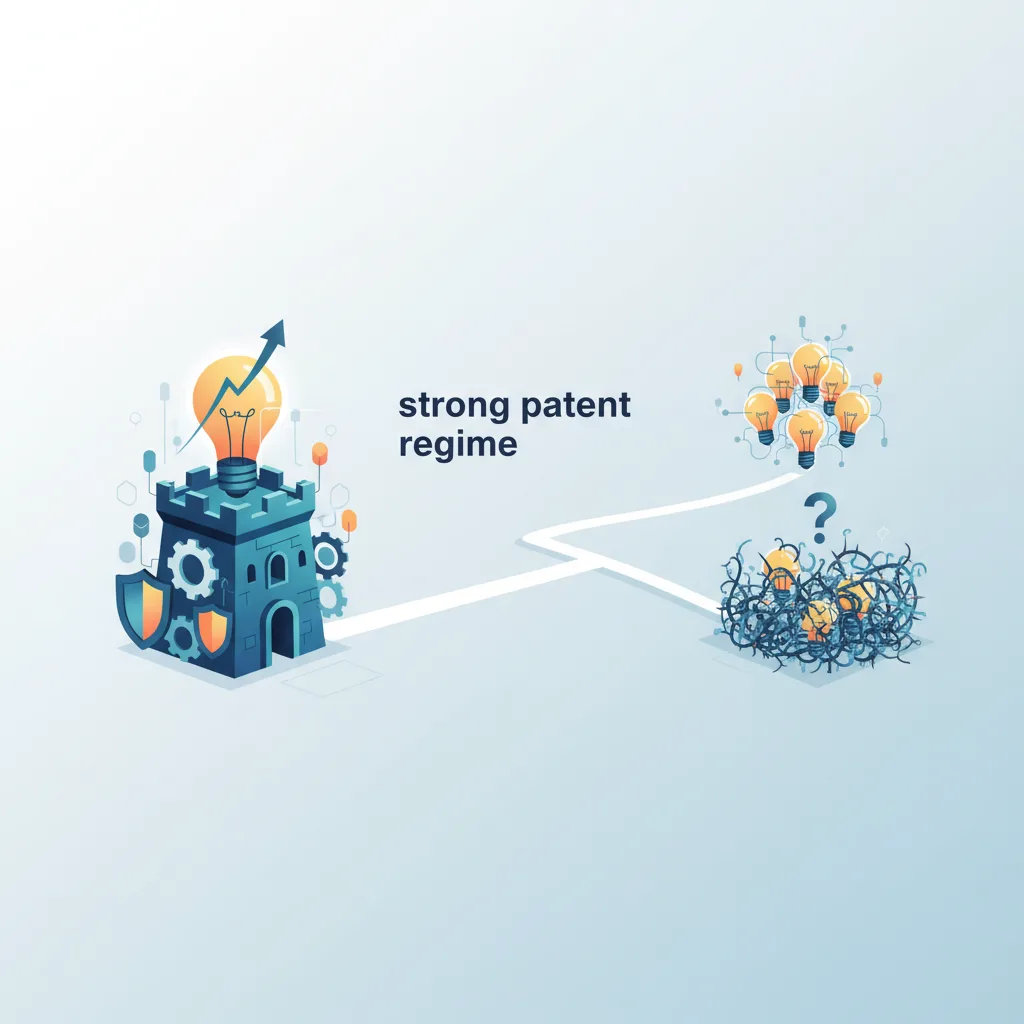
Consider this: while dependable patent systems are intended to foster groundbreaking concepts, their relationship to real world ingenuity is complex. Patents grant inventors exclusive rights, aiming to stimulate creativity. Yet, I have seen situations where this incentive backfires. A 2009 study by Bessen and Maskin (NBER) indicates that, paradoxically, beefed up patent protection can stifle progress, specifically where concepts are intensely intertwined. Does a strong patent regime truly guarantee increased ingenuity, or could it inadvertently smother the flames?
The Promise of Strong Patent Regimes
The core argument favoring a strong patent regime centers on its capacity to spur inventors into serious research. A patent bestows a temporary legal monopoly, allowing inventors to recoup investments and reap rewards. This holds particular importance in fields demanding substantial investment and lengthy development cycles, such as pharmaceuticals and biotech.
Without patents, copycats could easily duplicate inventions, disadvantaging originators and diminishing motivation. Patents actually promote competition where creativity gets rewarded and cleverness flourishes. I have watched firsthand as startups, buttressed by robust patents, secure funding and shake up entrenched industries, driving progress and benefiting consumers.
The Dark Side: When Patents Hinder Innovation
Even acknowledging the benefits, strong patent regimes might inadvertently suppress ingenuity. One major snag is the proliferation of “patent thickets.” Envision a tangled mess of overlapping and potentially conflicting patents. This can obstruct innovators striving to launch novel products or technologies without stepping on existing protected ideas. This is especially true in sectors wrestling with intricate technologies like software and telecommunications.
Another pitfall lies in the potential for “patent trolls,” also known as non-practicing entities (NPEs). Rather than pioneering new offerings, these outfits exploit patents to extract licensing fees from actively innovating businesses. These NPEs frequently acquire patents of dubious validity and then threaten businesses with infringement lawsuits. Consequently, companies are coerced into settlements or licensing payments, even if they independently conceived the technology.
From my consulting experience with various tech outfits, I have learned that apprehension surrounding patent litigation can impede ingenuity. Firms might shy away from specific research avenues to dodge potential lawsuits. This hesitancy can retard the creation of novel solutions, ultimately harming consumers.
Case Study: India and Patent Laws
The Indian patent system delivers a compelling illustration of the inherent complexities of patent law and its consequent impacts on ingenuity. Historically, India maintained a comparatively flexible patent system, particularly within its pharmaceutical sector. This facilitated the production of generic versions of patented medications. Currently, India has been fortifying its patent regulations to comply with global trade agreements and draw foreign investment.
This evolution has stoked anxieties about its prospective influence on the accessibility of affordable medicines. Concerns linger that strong patent regimes could curtail inventiveness within the Indian pharmaceutical arena. While enhanced patent safeguards might entice foreign entities to invest in Indian research, they could simultaneously deter Indian firms from producing and distributing generic drugs, vital for delivering economical healthcare to the country’s expansive population.
If you intend to file a patent in India, familiarize yourself with the precise stipulations and protocols mandated by the Indian patent office. I strongly advocate seeking counsel from seasoned patent attorneys possessing a deep understanding of local statutes and regulations.
Balancing Act: Finding the Right Approach
The linchpin of bolstering ingenuity resides in achieving equilibrium. It is critical to furnish inventors with sufficient motivation while forestalling impediments to subsequent ingenuity. This calls for a nuanced strategy to patent law, one that acknowledges the distinct attributes of diverse sectors alongside the capacity for both salutary and detrimental ramifications.
Some possible solutions include:
- Tightening the criteria for patentability to guarantee patents are awarded only to genuinely original and non obvious inventions.
- Establishing mechanisms to contest the legitimacy of questionable patents.
- Advocating the adoption of patent pools and cross licensing pacts to ease technology exchange.
- Backing open systems where firms collaborate and disseminate knowledge to accelerate ingenuity.
Conclusion
The interplay between patent law and ingenuity is multifaceted. Although strong patent regimes can galvanize ingenuity by granting exclusive entitlements to inventors, they can also constrain ingenuity through patent thickets, the clout wielded by patent trolls and constrained access to affordable treatments. Striking a delicate balance is paramount for cultivating a vibrant and competitive ecosystem that justly rewards both inventors and society. As specialists, we remain dedicated to scrutinizing and adapting to the shifting terrain of intellectual property. We guarantee our clientele are optimally positioned to navigate patent law’s intricacies and realize their ingenuity aspirations.