
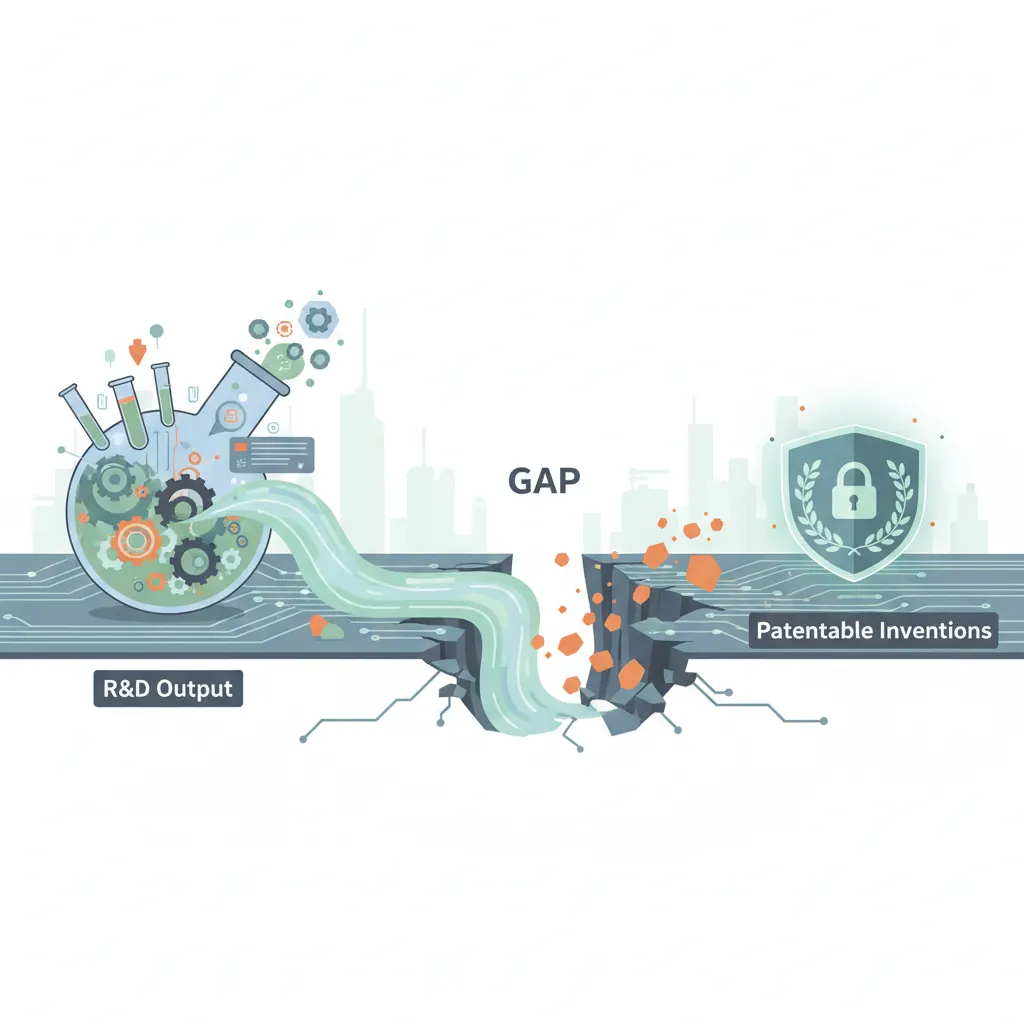
Each year, corporations gamble fortunes on Research and Development (R&D), chasing groundbreaking ideas to outmaneuver competitors. Yet, vast sums often vanish, yielding zero inventions worthy of a patent. I recently examined a report from the USPTO exposing a worrying trend: R&D spending is soaring, but patent applications are not keeping pace. This gap highlights a growing problem: investment is not translating into real results. We have personally seen how this disconnect damages a company’s bottom line and thwarts its ability to truly innovate.
Understanding the R&D Spending and Patent Disconnect
What is behind this expanding divide? Multiple factors converge. A major cause is a lack of clearly defined strategy linking R&D directly to overall business goals. Too often, research proceeds without a firm grasp of its potential commercial use or, crucially, its ability to be patented. The result? Valuable resources get poured into research unlikely to yield protectable and, most importantly, profitable inventions.
Consider also the increasing complexity of modern technology. Across industries, real innovation demands a multidisciplinary approach and a deep understanding of complex science. This reality dramatically complicates identifying and creating patentable inventions, particularly if R&D teams lack needed skills or resources. The competitive landscape also never stands still. New technologies and innovations emerge at an accelerating pace. Companies must take a far more predictive and strategic approach to R&D if they want to maintain their competitive position.
Having guided numerous organizations through the complicated patent application process, I can confirm that taking a proactive stance on intellectual property (IP) is essential. Delaying patentability considerations until R&D ends often means missed opportunities and wasted money. Instead, companies should weave IP considerations into every stage of R&D, from initial planning to final product release and marketing.
Optimizing R&D for Patentable Inventions
The answer to closing the gap between R&D investment and patentable inventions lies in fundamentally refining the R&D process. This means using strategies and practices that help organizations identify, develop and protect their inventions more effectively. Here are some actionable steps we suggest:
- Establish Clear Goals and Objectives: Before approving any R&D project, set explicit, measurable goals tightly aligned with the company’s broader business strategy. This involves clearly identifying the specific problems the research aims to solve and the potential commercial uses of resulting inventions.
- Conduct Thorough Prior Art Searches: Before committing significant resources to a research area, conduct exhaustive searches to learn whether similar inventions already exist. This vital step helps companies avoid wasting resources on research unlikely to produce patentable results.
- Foster Collaboration and Communication: Effective teamwork and open communication between teams and departments are essential for R&D success. This requires building an environment of open dialogue where researchers freely share insights and promoting strong partnerships between researchers, engineers and business strategists.
- Implement a Robust IP Management System: A strong IP management system is vital for carefully managing the company’s intellectual property assets. This includes keeping detailed records of all inventions, patents, trademarks and other IP rights and strictly enforcing protocols for protecting those rights.
Why File a Patent in India?
For many businesses, expanding into international markets is a basic growth requirement. India, with its rapidly growing economy, presents a compelling opportunity for companies looking to expand their global reach. To protect their inventions within India, companies absolutely must file a patent in India. Here is why:
- Market Protection: A patent secured in India grants exclusive rights to the invention within the nation’s borders. It prevents unauthorized parties from making, using or selling the invention.
- Competitive Advantage: Patent protection provides companies a strong competitive advantage in the Indian market, allowing them to differentiate their offerings and capture significant market share.
- Licensing Opportunities: Patents can be licensed to other organizations, generating revenue and expanding the invention’s reach.
- Investment Attraction: A solid patent portfolio attracts investors and potential partners, providing access to needed capital and resources to drive expansion.
Navigating the Patent Process in India
Successfully obtaining a patent in India can be complex and lengthy. The process involves several distinct steps. These include preparing and submitting a carefully written patent application, undergoing rigorous examination by the Indian Patent Office and carefully addressing any objections from the examiner. We always advise our clients to seek expert guidance from experienced patent attorneys who can expertly guide them through the process and ensure applications are perfectly prepared and prosecuted.
One vital factor involves clearly confirming that the invention meets all patentability requirements under Indian law. This means demonstrating that the invention is truly new, not obviously apparent and has industrial applications. It also requires providing a clear and complete description of the invention in the patent application, including detailed diagrams and clear explanations.
The Role of Innovation Culture
Beyond specific tactics, building a vibrant culture of innovation is vital for maximizing the return on R&D spending and patent output. This means creating an environment where creativity is actively encouraged, calculated risk taking is tolerated and experimentation is highly valued. When employees feel empowered to champion new ideas and challenge existing norms, they are far more likely to develop groundbreaking solutions that turn into patentable inventions.
Organizations should also invest strategically in training programs that give employees the skills to innovate effectively. This includes targeted training in areas such as design thinking, complex problem solving and intellectual property management. It also involves proactively creating opportunities for employees to engage with experts from different fields and participate in relevant industry events.
Measuring the Impact of R&D on Patent Output
To strategically manage R&D spending and patent output, rigorously measuring the impact of R&D investments on patent filings is essential. This requires carefully tracking key performance indicators, such as the number of patent applications filed per R&D dollar spent, the success rate of patent applications and the actual commercial value of patented inventions. By carefully monitoring these metrics, organizations can identify areas where they are getting the best returns and areas where they need to improve.
Organizations should also conduct regular audits of their R&D spending and patent processes to proactively identify potential problems. This includes a thorough review of how R&D projects are selected, managed and funded and the systematic processes governing the identification, protection and commercialization of inventions. By addressing these problems, companies can significantly improve the efficiency of their R&D efforts.
The Future of R&D and Patenting
As technology continues to advance rapidly, the importance of both R&D and patenting will only grow. Organizations that skillfully manage their R&D investments and proactively protect their inventions will certainly thrive in the fiercely competitive global market. This requires a strategic shift that seamlessly aligns R&D efforts with overall business goals, promotes a culture of continuous innovation and carefully integrates IP considerations into every aspect of the R&D process.
Businesses must also stay informed about the constantly changing legal landscape surrounding patents. This includes proactively monitoring key developments in patent law, such as upcoming changes to patent eligibility rules. It also means maintaining a comprehensive understanding of emerging technologies and their potential implications for patenting strategies, especially in areas such as artificial intelligence and nanotechnology.
Conclusion
Effectively closing the persistent gap between R&D output and generating patentable inventions presents a difficult but achievable challenge for organizations seeking to innovate and compete successfully in the global economy. By carefully implementing the strategies described above, companies can significantly maximize the return on their R&D investments and build a strong patent portfolio that effectively protects their inventions and provides a lasting competitive advantage, especially when they file a patent in India. The key is to consistently make smart, informed decisions and to proactively and strategically manage intellectual property assets.