
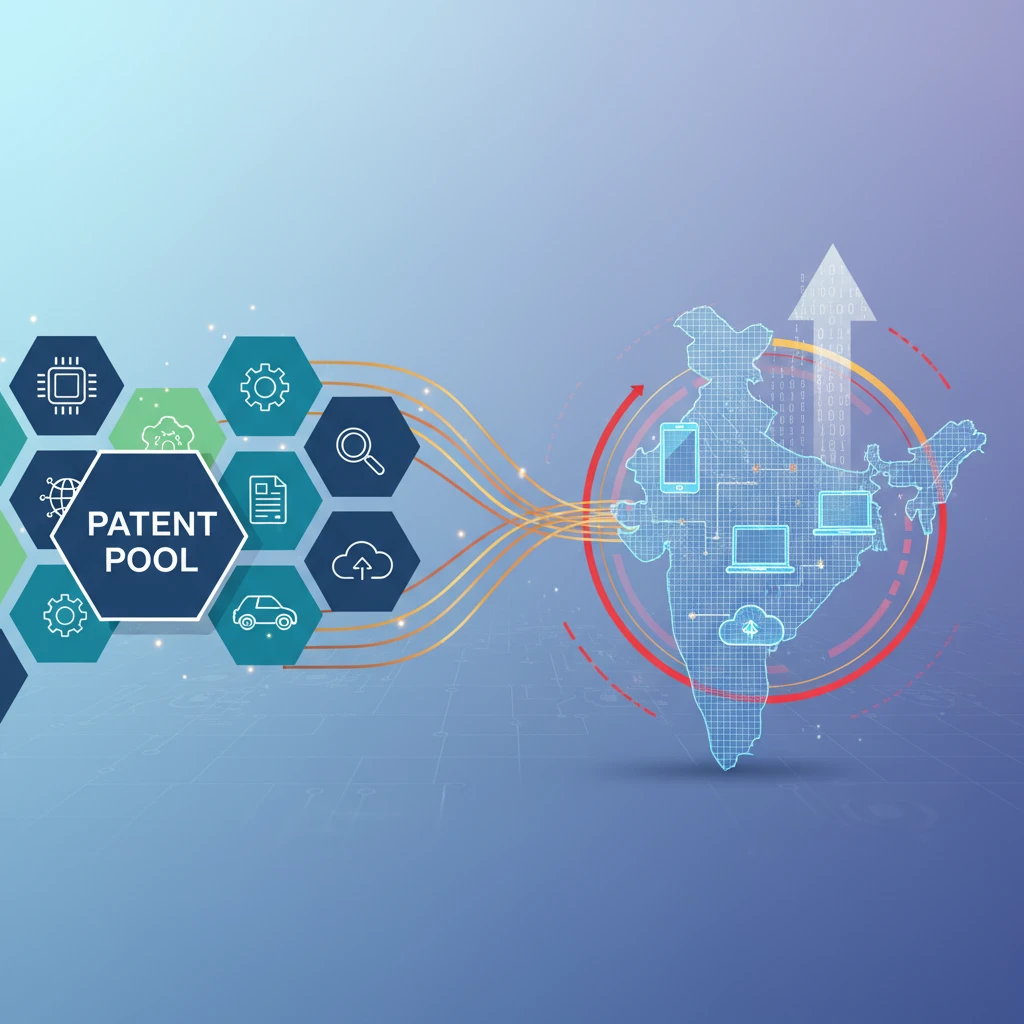
Believe it or not, patent applications in India experienced double digit growth last year. A 2023 report by the World Intellectual Property Organization (WIPO) brought this surge to light, suggesting that India’s tech sector is booming and that there is a growing demand for shrewd intellectual property management. The role of patent pools and Standard Essential Patents (SEPs) are becoming increasingly vital. If you are planning to file a patent in India, or even just trying to wrap your head around the intricacies of tech patent filing, grasping how these mechanisms operate is critical.
Patent Pools: Cooperation in Action
What exactly are patent pools? Picture them as cooperative arrangements where various patent holders grant licenses for their patents to one another, or to external parties. This proves particularly useful when multiple patented inventions are required to support specific technologies. It resembles a comprehensive collection, granting access to pivotal technology and alleviating the necessity for individual negotiations with each separate patent owner. Everything becomes less complicated.
From where I stand, patent pools radically simplify licensing procedures, minimize transaction overhead and foster increased levels of ingenuity. They hold particular relevance in domains such as 5G telecommunications, consumer electronics and the Internet of Things (IoT). Rather than getting mired in independent licensing arrangements, enterprises gain entry to technology through a solitary, unified structure.
What Benefits do Patent Pools Offer?
- Simplified Licensing: Businesses acquire a single license that encompasses all required patents, thereby circumventing the need to negotiate with a multitude of individual patent holders.
- Lower Transaction Expenses: Licensing operations entail reduced administrative and legal costs.
- Accelerated Advancement: Streamlined technology access expedites the creation of novel goods and services.
- Equitable Conditions: Patent pools generally function under FRAND (Fair, Reasonable and Non Discriminatory) stipulations, guaranteeing impartial access to pooled technologies.
SEPs: The Foundation of Standard Technologies
Standard Essential Patents (SEPs) are patents indispensable for employing an industry standard. Consider patents safeguarding fundamental technology in 4G, 5G or Wi Fi infrastructures. They are imperative in ensuring seamless interoperability between various devices and systems.
SEPs present a conundrum. Owners of these patents wield considerable market influence given that their patents are paramount to industry benchmarks. In order to avert prospective exploitation, SEP proprietors pledge to license their patents according to FRAND principles.
In my experience, patent pools demonstrate exceptional effectiveness in the stewardship of SEPs. The aggregation of SEPs for a designated benchmark within patent pools begets a lucid licensing ecosystem. This arrangement advantages both patent custodians and technology users, thereby galvanizing a fertile milieu for ingenuity.
India’s Escalating Demand for Patent Pools and SEPs
As India’s technological landscape expands, its reliance on standardized technologies intensifies. This heightened dependence amplifies the relevance of patent pools and SEPs. As an increasing number of firms endeavor to file a patent in India and pioneer transformative offerings, the imperative for efficacious licensing mechanisms will only continue to surge.
The Indian government appreciates the significance of intellectual property entitlements and is committed to fortifying its patent framework. This encompasses the promotion of patent pools and SEPs, alongside enhancements to patent examination protocols. These initiatives are geared toward the establishment of an atmosphere conducive to both ingenuity and investment within India’s burgeoning tech domain.
What Impeding Factors and Prospects Lie Ahead?
Various encumbrances impede the effective deployment of patent pools and SEPs within India:
- Intricate Patent Regulations: India’s patent statutes may present challenges, notably for individuals unfamiliar with its regulatory milieu.
- Enforcement Complications: Upholding patent entitlements in India may prove arduous because of protracted judicial proceedings and a scarcity of specialized proficiency.
- Restricted Understanding: A substantial proportion of Indian enterprises remain uninformed regarding the merits of patent pools and SEPs.
It is my belief that these impediments also engender prospects. By resolving these predicaments and instituting a more streamlined patent apparatus, India is capable of catalyzing heightened levels of ingenuity and luring substantial investments.
Deciphering the Indian Patent System
For entities aspiring to file a patent in India, possessing a thorough grasp of the Indian patent system assumes paramount importance. This entails:
- Patentability Prerequisites: Comprehending the standards for patent eligibility within India, notably novelty, inventive progression and industrial applicability.
- Patent Solicitation Procedure: Mastering the stages implicated in lodging a patent application in India, encompassing the formulation of the specification, submission of the application and response to formal communications.
- Patent Safeguarding: Acquiring awareness of the methodologies for defending patent entitlements in India, inclusive of litigation and alternative conflict resolution avenues.
I would urge you to seek counsel from patent lawyers or agents specializing in the Indian patent sphere. Their perspectives furnish invaluable direction throughout the patent expedition.
What Future Awaits Tech Patent Filing and Ingenuity in India?
The prospects for tech patent filing and ingenuity within India appear exceptionally encouraging. Underpinned by an expanding economy, a proficient workforce and energetic governmental backing, India is rapidly evolving into a pivotal hub for global technological advancement.
As India’s tech infrastructure matures, the role of patent pools and SEPs will grow in importance. By tactically harnessing these mechanisms and buttressing its intellectual property safeguards, India is equipped to galvanize pioneering innovations, generate employment opportunities and stimulate enduring economic proliferation. The administration of the innovation patent framework will be augmented.
So what is the takeaway? A complete grasp of patent pools and SEPs is crucial for India’s tech sector. By adopting these strategies and strengthening its intellectual property safeguards, India can realize its complete potential as an innovation leader. The advantages are substantial.